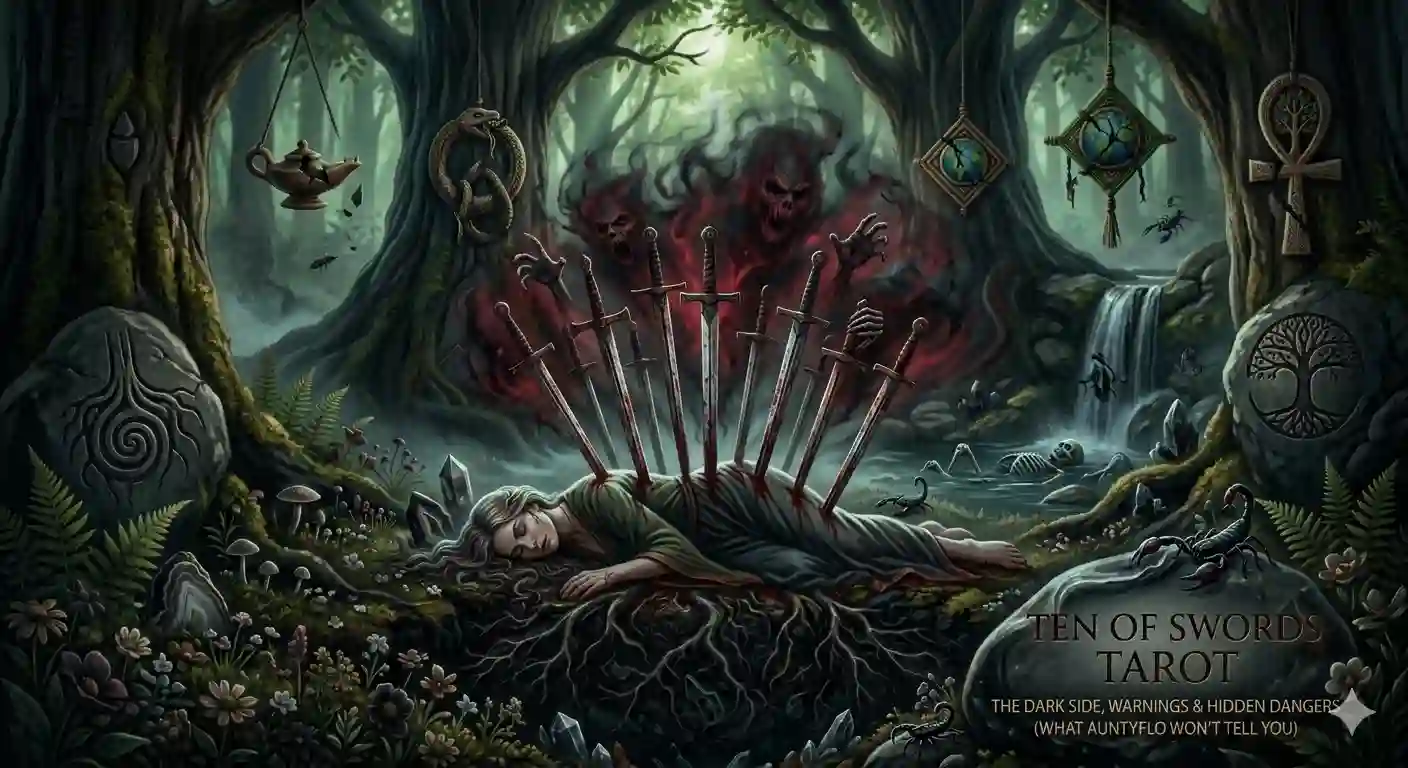
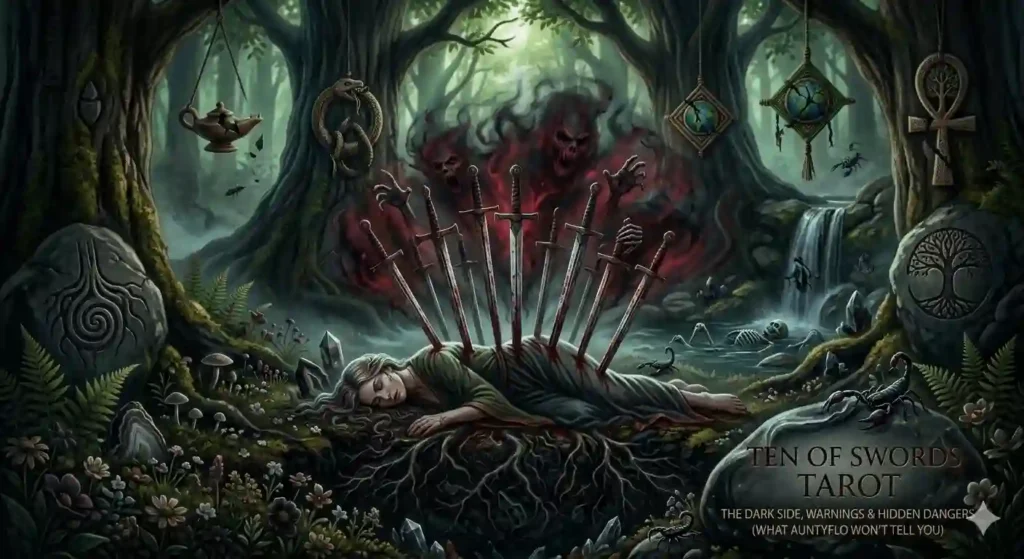
Ten of Swords Tarot: The Dark Side, Warnings & Hidden Dangers (What Auntyflo Won’t Tell You)
Fast Answer: Ten of Swords Tarot Meaning – The Harsh Truth
When searching for the ten of swords meaning, you will quickly encounter interpretations that try to soften the blow. Many popular tarot websites, such as Auntyflo, frame this brutal card as a sign that “the worst is over,” promising imminent rebirth, closure, and the dawn of a bright new day. They tell you that hitting rock bottom means the only way left to go is up.
This is a dangerous oversimplification. The harsh truth is that what does the ten of swords mean is often complete devastation. This card represents profound betrayal, mental and emotional collapse, utter defeat, and the darkest night of the soul. The image of a person lying face down with ten swords buried in their back is not a gentle metaphor for transition. Recovery from this state is entirely possible, but it is far from guaranteed without deep shadow work, painful grieving, and honest integration. Believing that “the worst is over” just because you pulled this card can lead to spiritual bypassing, leaving you unprepared for the long, arduous road of genuine healing that lies ahead.
Ten of Swords Tarot: The Shadow Side & Hidden Warnings
The imagery of the Ten of Swords is arguably one of the most violent and distressing in the standard Rider-Waite-Smith tarot deck. A figure lies bleeding on a desolate shore, pinned to the earth by ten long blades, beneath a pitch-black sky. To look at this card and immediately focus on the thin sliver of yellow sunrise in the background while ignoring the slaughtered body in the foreground is the ultimate act of denial.
The ten of swords tarot shadow side reveals the total annihilation of hope. It symbolizes being stabbed in the back—often by people you trusted, by systems you relied upon, or by your own self-sabotaging mind. It marks the precise moment when everything has truly fallen apart. Contrasting sharply with an optimistic spin, minimizing this card’s pain keeps people stuck in denial. When you refuse to acknowledge the sheer magnitude of your wound, you bleed out emotionally. The hidden warning of the Ten of Swords is that ignoring the severity of your defeat will inevitably breed bitterness, victim mentality, and a repetitive cycle of catastrophic failures.
Introduction: Why the Ten of Swords Is Not Always “The Worst Is Over”
Modern tarot interpretation has a toxic habit of softening difficult cards into quick “rebirth” narratives. We live in a culture that demands fast healing and instant transformation. When we hit a ten of swords rock bottom, we desperately want to believe that the pain has peaked and the universe is about to reward our suffering with a beautiful new beginning.
However, hitting rock bottom does not automatically bounce you back to the surface. Sometimes, rock bottom is just the floor of a very dark cave where you must sit for a long time. The Ten of Swords warns of the very real possibility of prolonged despair, a PTSD-like aftermath, and the collapse of your entire foundation. It represents a symbolic death and total collapse of the life you once knew. If the underlying wounds that led to this devastation are not addressed, the “new beginning” you rush into will simply be the start of another cycle of betrayal and loss.
Spiritual Meaning of the Ten of Swords – The Cautionary Message
On a deeper spiritual layer, the negative meaning of ten of swords signals a karmic reckoning. It is a soul-level test of ultimate surrender and the agonizing death of ego illusions. The universe has stripped you of your defenses, forcing you to face the raw, unvarnished truth of your situation.
Yet, the spiritual trap here is immense. The mind, terrified of this vulnerability, often resorts to spiritual bypassing. You might hear yourself or others saying, “It’s all part of the divine plan,” or “Everything happens for a reason.” While there may be a higher truth to those statements, using them to avoid feeling the searing pain of ten blades in your back is spiritual avoidance. The card demands that you confront the deep fears after hitting rock bottom rather than papering over them with toxic positivity. It also highlights the danger of avoiding responsibility after collapse, urging you to examine what choices led to this desolate beach.
Psychological Interpretation: Betrayal Trauma, Collapse & Victim Mentality
Psychologically, the Ten of Swords is a masterclass in trauma and grief. It mirrors the darkest stages of the grieving process—specifically severe depression and the crushing weight of forced acceptance. When this card appears, it often points to profound betrayal trauma. Your trust has been shattered, leading to a state of learned helplessness where you believe that no matter what you do, you will only be hurt again.
This collapse of identity triggers severe anxiety and despair following devastation. You might find yourself trapped in a “why me?” victim energy. While you have legitimately been victimized, staying permanently anchored in the identity of the victim prevents you from moving toward empowered rebuilding. The psychological warning of the Ten of Swords is clear: you must process the suppressed rage and betrayal anger without letting it calcify into a permanent state of bitterness and chronic helplessness.
Symbolism Table: Positive vs. Shadow Meanings of the Ten of Swords
| Symbol / Concept | Auntyflo-Style “Positive” Meaning | The Real Shadow Meaning & Warning |
|---|---|---|
| Ten Swords in Back | The pain is over, no more swords can hit you. | Total devastation, catastrophic betrayal, overkill. |
| Figure Face Down | Surrender to the divine, letting go. | Utter defeat, learned helplessness, inability to rise. |
| Black Sky | The darkness before the dawn. | Profound depression, the dark night of the soul. |
| Yellow Horizon | Hope, a bright new beginning is imminent. | A distant reality; the dawn cannot be rushed or forced. |
| Red Cloak | Releasing old passions and desires. | Bleeding out, loss of vital life force and energy. |
| Calm Water | Emotional peace after a storm. | Emotional numbness, shock, dissociation from trauma. |
| The Number 10 | Completion of a cycle, a necessary ending. | Hitting the absolute bottom, exhaustion, cumulative damage. |
| Hand Gesture (Blessing) | Spiritual grace, forgiving your enemies. | Martyrdom, spiritual bypassing, refusing to feel righteous anger. |
| Rock Bottom | The only way left to go is up. | Being crushed under the weight of your own collapsed life. |
| Betrayal | Learning who your true friends are. | Deep betrayal trauma that requires years of nervous system regulation. |
| Finality | Closure, moving on cleanly. | Unresolved grief that haunts you if not properly mourned. |
| Transformation | Becoming a new, stronger person. | identity destruction and rebuilding that is agonizing and slow. |
Common Ten of Swords Scenarios & Their Darker Interpretations
Ten of Swords in Love/Relationships
When searching for ten of swords betrayal meanings in love, the narrative often points to a “clean break” allowing you to find your true soulmate. The darker reality is devastating abandonment, discovering infidelity, or a sudden, cruel divorce.
Case Study: Mark pulled the Ten of Swords the week his wife of fifteen years emptied their bank accounts and left without a word. The toxic positivity crowd told him it was making room for “better love.” In reality, Mark suffered a severe mental breakdown and had to confront the sheer loss of control in betrayal before he could even function, let alone date again.
Ten of Swords in Career/Money
Auntyflo might suggest this card means leaving a dead-end job for a better career. In reality, it often signifies total financial ruin, bankruptcy, public humiliation, or being fired maliciously.
Case Study: Sarah’s startup collapsed due to her co-founder’s embezzlement. The Ten of Swords wasn’t a gentle nudge to pivot; it was the death of her life savings and professional reputation. She experienced profound feeling trapped after total defeat as she navigated lawsuits and crippling debt.
Ten of Swords in Health
This card rarely just means “getting over a cold.” It points to severe burnout, a mental breakdown, or the sudden flare-up of a chronic illness that strips away your independence. It represents the moment your body forces you to stop because you ignored all previous warnings (the other sword cards).
Ten of Swords as Final Outcome or Blockage
As an outcome, this card warns that your current path leads straight off a cliff. As a blockage, it indicates you are fiercely resisting an inevitable ending, preferring the familiar agony of the swords to the terrifying unknown of the dawn.
Reversed Ten of Swords: Refusing to Let Go
The ten of swords reversed is often heralded as a miraculous recovery. However, its shadow side is far more insidious. It means you are dragging out your own suffering. You are surviving the fatal blow, but keeping the swords lodged in your back to maintain your victim identity. You refuse to accept that it is truly over, choosing to bleed slowly rather than face the finality of the death.
Emotional States Reflected by the Ten of Swords
The emotions evoked by this card are not for the faint of heart. If you pull this card, you are likely drowning in utter despair, shock, and profound grief. You feel a cold, piercing betrayal rage that has nowhere to go. There is a deep, agonizing numbness that sets in to protect the brain from shattering completely.
You may feel a hopelessness that stretches out endlessly before you, accompanied by the quiet, suffocating terror that nothing will ever be okay again. It is the raw sensation of absolute failure, vulnerability, and abandonment.
Life Situations That Trigger the Ten of Swords as a Warning
The Ten of Swords does not appear for minor inconveniences. It shows up for the cataclysms.
- Sudden Betrayal: Discovering your partner has a second family, or your best friend has been stealing from you.
- Business Failure: Losing your company and facing bankruptcy after years of backbreaking work.
- Public Humiliation: Being “canceled,” exposed, or suffering a devastating loss of reputation.
- Health Crises: Receiving a diagnosis that permanently alters the trajectory of your life.
- Cumulative Collapse: The moment when the death of a parent, the loss of a job, and a breakup all happen within the same month, breaking the camel’s back.
Spiritual Lessons from the Shadow Side of the Ten of Swords
What is this brutal card truly teaching you? It teaches that rock bottom is not a magical trampoline. It is a burial. To rise from it, you must first accept that you are in the dirt.
True rebirth requires fully feeling the death of your old life. It requires releasing your victim stories, not because you weren’t wronged, but because those stories will keep you chained to the people who wronged you. Surrender is a sacred, active process. Passive waiting for the universe to fix everything is not surrender; it is dissociation. The lesson is radical acceptance of what is, no matter how horrific.
Is the Ten of Swords a Bad Omen?
Yes. It is vital to address this directly: the Ten of Swords is one of the most difficult cards in the deck and should be taken as a serious warning of impending or current collapse. When it appears, it demands immediate, unflinching confrontation with reality. Forced positivity will only ensure the swords cut deeper. It tells you that an ending is here, it is going to hurt immensely, and you must prepare your nervous system for the impact.
Practical Recovery & Integration Protocol After the Ten of Swords (Extra Value Section)
When you are living the reality of the Ten of Swords, you need practical, grounded steps, not fluffy spiritual platitudes. Use this protocol to navigate the collapse.
Immediate Grounding and Safety Rituals
When everything falls apart, your nervous system enters fight, flight, or freeze. Focus only on the next 24 hours. Eat warm food. Sleep. Drink water. Remind your body that, despite the emotional slaughter, your physical vessel is currently safe.
12 Powerful Journaling Prompts for Processing
- Who or what has truly betrayed me, and how am I minimizing that pain?
- What part of my identity died in this collapse?
- In what ways am I resisting the finality of this ending?
- How is facing yourself after the ten swords challenging my ego?
- Where am I using “spirituality” to avoid feeling furious?
- What victim narrative am I clinging to for comfort?
- What signs did I ignore (the 1 through 9 of swords) that led to this?
- How can I practice radical acceptance of this moment?
- Who can I safely fall apart in front of?
- What does the absolute worst-case scenario look like, and how would I survive it?
- How do I navigate the loss of power and reclaiming it?
- What small, tiny step can I take today to rebuild one brick of my foundation?
Shadow Work Exercises and Grieving
Allow yourself to rage. Beat a pillow, scream in your car, write letters to those who betrayed you and burn them. Do not rush to forgiveness. Forgiveness before anger is just emotional suppression. Seek professional help—therapy, trauma counselors, or support groups. A Ten of Swords event often requires a village to heal from.
Deep Reflective Passage
There is no poetry in the initial strike of the blade. There is only the sickening sound of metal parting flesh, the shocking gasp of air leaving the lungs, and the sudden, terrifying realization that the ground is rushing up to meet you. The Ten of Swords does not ask for your permission. It takes everything. It pins you to the cold, unforgiving earth, leaving you to stare at the dirt while the world you built burns to ash behind you. The silence that follows the screaming is the heaviest sound in the universe. It is the loneliness of total defeat.
Yet, as you lie there, bleeding out the expectations, the illusions, and the toxic attachments that brought you to this desolate shore, a brutal alchemy begins. The ego dies. The false self shatters. You realize that the people who held the swords cannot hurt you anymore, because there is nothing left for them to take. And in that terrifying, empty space—once the weeping stops and the numbness fades—you must make a choice. You can let the earth swallow you, or you can slowly, agonizingly, push yourself up onto your knees. The dawn on the horizon does not care if you stay down or rise. It simply breaks. But the self that eventually stands up to meet that sunrise will be made of iron, forged in the darkest night, and utterly, ruthlessly authentic.
FAQs
1. What does the Ten of Swords reversed really mean?
While it can mean recovery, its shadow side points to refusing to let go. You are dragging out a painful ending, resisting closure, or returning to an abuser/toxic situation, prolonging your own suffering.
2. Is the Ten of Swords always the end or can it be survived?
It is absolutely survivable, but it marks the definitive end of a cycle, a mindset, or a relationship. The “you” that entered the situation will not be the “you” that survives it.
3. Why do I keep pulling the Ten of Swords during hard times?
You are likely resisting the reality of your situation. The tarot will keep showing you the ten swords until you accept that the situation is dead and stop trying to resuscitate it.
4. Does it predict literal death or just symbolic?
In 99% of readings, it is a symbolic death—the death of a job, a marriage, an ego, or a belief system. It signifies a psychological ending, not a physical one.
5. How to handle the Ten of Swords in love readings?
Accept that the relationship is profoundly broken. If it is to be salvaged, it must be burned to the ground and rebuilt from scratch. More often, it means accepting a painful betrayal and walking away.
6. How to handle it in a career reading?
Prepare for a major loss. Secure your finances, update your resume, and brace for a difficult transition. Do not trust co-workers or business partners blindly right now.
7. Shadow side vs the “worst is over” meaning?
The “worst is over” is passive; it implies you just have to wait for things to get better. The shadow side demands active grieving and acknowledges that the aftermath (PTSD, rebuilding) can be just as hard as the initial blow.
8. Can it represent self-sabotage?
Yes. Sometimes we are the ones holding the swords. We destroy our own lives through addiction, toxic behaviors, or pushing away everyone who loves us until we hit rock bottom.
9. How does it connect to feeling trapped or anxiety?
The Ten of Swords represents the culmination of anxiety. You spent the Nine of Swords worrying about the worst happening. The Ten is the worst actually happening, leaving you feeling entirely trapped under the weight of the disaster.
10. What practical steps should I take immediately after pulling this card?
Stop making big decisions. Ground yourself. Audit your life for areas of betrayal or collapse. Seek a therapist or trusted confidant, and focus solely on your basic survival needs for the immediate future.
11. Does the Ten of Swords mean I am a victim?
It means you have experienced victimization. The danger of the card is letting that experience become your permanent identity.
12. Why are there ten swords instead of just one?
Overkill. It signifies that the universe (or the betrayer) made absolutely sure the situation was dead. There is zero ambiguity left.
13. What does the black sky symbolize?
The dark night of the soul. It is the period of profound depression and spiritual emptiness that follows a catastrophic loss.
14. What does the red cloak on the figure mean?
The loss of vital energy, passion, and life force. You are energetically bleeding out.
15. Can the Ten of Swords indicate a physical health breakdown?
Yes. It often points to adrenal fatigue, a nervous breakdown, or a body that has simply quit functioning because the mind pushed it too far.
16. How long does the Ten of Swords energy last?
It lasts exactly as long as you refuse to accept the ending. Once you surrender to the reality of the death, the healing process begins.
17. What is the difference between the Ten of Swords and the Death card?
The Death card is a natural, inevitable, and often peaceful transition. The Ten of Swords is violent, sudden, unnatural, and often involves betrayal or malice.
18. How do I ever trust again after a Ten of Swords experience?
Slowly. By first learning to trust yourself. You learn to trust your own intuition so deeply that you know you will never let someone put ten swords in your back again.
Stop waiting for the dawn to automatically fix your life. The Ten of Swords requires radical, courageous grieving. Acknowledge the swords, pull them out one by one, and begin the hard, holy work of putting yourself back together.