Anger & Shadow Emotion Dream Meaning – Spiritual Meaning | Symbolism | Interpretations
Fast Answer: Anger & Shadow Emotion Dreams
Dreams about anger and shadow emotions symbolize unexpressed feelings, inner tension, boundary violations, or parts of the self seeking acknowledgment—reflecting emotional truth rather than danger or wrongdoing. These dreams are not a sign of moral failure or a prediction of violence but a profound communication from your inner world.
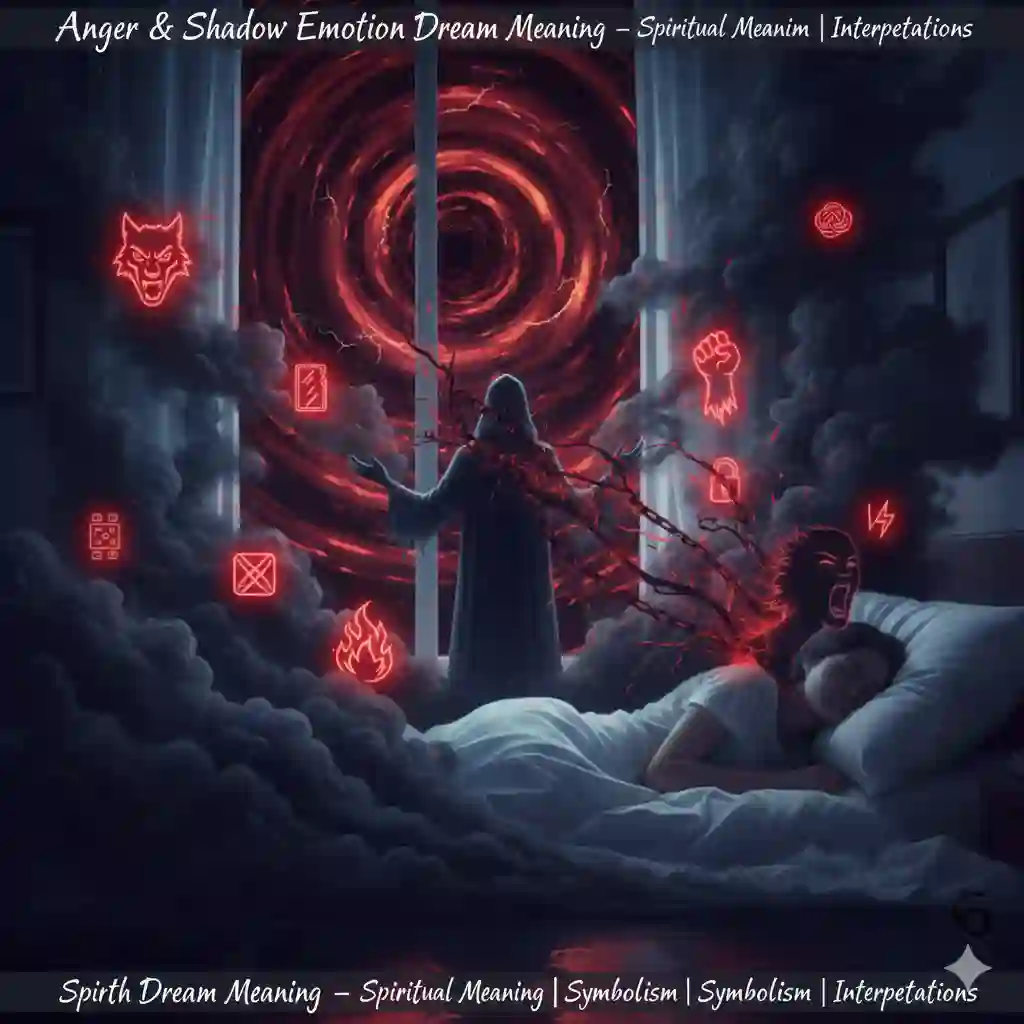
Think of anger in a dream as pure information. It is an energetic signal alerting you to something that is out of alignment in your life. It could be an overlooked need, an unspoken truth, or a personal limit that has been crossed. Similarly, shadow emotions—like jealousy, rage, or deep-seated animosity—are simply unintegrated aspects of your whole self. They are parts of your personality that have been suppressed or judged, and they are now surfacing in the safe space of a dream to be seen and understood.
The appearance of these intense feelings is a call for awareness before transformation. Your psyche is not asking you to act out in anger but to listen to its message with compassion. By turning toward these difficult emotions, you begin the sacred work of reclaiming your full, authentic self and restoring inner harmony.
Introduction: Why Anger and Shadow Emotions Appear in Dreams
The dream world can be a place of serene landscapes and joyful encounters, but it can also plunge us into the heart of intense, uncomfortable emotions. Waking from a dream filled with rage, animosity, or shame can be deeply unsettling, leaving us questioning our own character. Why does the subconscious mind conjure such potent and often disturbing feelings while we sleep? The answer lies in the profound wisdom of our psyche and its unwavering commitment to wholeness.
Our conscious mind works hard to present a stable, acceptable version of ourselves to the world. We learn to suppress feelings that are deemed “negative” or socially inconvenient. Anger, jealousy, and deep-seated resentment are often pushed aside in favor of a calm and collected demeanor. However, these emotions do not simply disappear. They are powerful forms of energy that, when ignored, accumulate in the unconscious. Dreams become the safe container, the sacred theater where these suppressed feelings can finally have a voice.
This process of unconscious release is a vital part of maintaining psychological and spiritual health. A dream of explosive rage or silent resentment is your psyche’s way of ensuring emotional honesty. It creates a space where you can experience the truth of your feelings without real-world consequences. This is not a sign that you are losing control; it is an invitation to engage in a healing process. By bringing these shadow emotions into the light of your dreams, your deeper self is guiding you toward greater self-awareness, integration, and ultimately, a more authentic and balanced life.
Spiritual Meaning of Anger in Dreams
From a spiritual perspective, anger appearing in a dream is not a destructive force but a sacred and potent form of energy. It is the soul’s primary tool for setting and defending boundaries. Think of it as the spiritual immune system in action, signaling that something has trespassed upon your inner sanctuary. This dream is not a judgment of your character but a vital signal of misalignment. It asks: “Where is my energy being drained? Where is my truth being compromised? What part of my life is out of harmony with my soul’s purpose?”
This dream is a call to differentiate between protective and destructive anger. Destructive anger lashes out blindly, causing harm to yourself and others. Protective anger, however, is a clear, clean energy that says “no” to what is not right for you. The spiritual message of an anger dream meaning is to learn to harness this protective power. Your soul is guiding you to transform the raw, chaotic energy of rage into the focused, powerful energy of clarity.
When you dream of anger, your spirit is inviting you to stand in your truth. It is a sign that you are being called to reclaim your power, speak up for your needs, and honor your own sacred space. By learning to listen to the wisdom of your anger, you turn a perceived “negative” emotion into a profound catalyst for spiritual growth and authentic living.
Understanding Shadow Emotions in Dream Symbolism
The concept of the “shadow” is one of the most important ideas in both spiritual and psychological dream work. Your shadow self is not an evil or sinister part of you. It is, quite simply, all the aspects of yourself that you have rejected, disowned, or suppressed. These can include traits we perceive as negative—like jealousy, greed, or rage—but also positive ones we were taught to hide, such as our creative brilliance, our ambition, or our untamed joy.
When we repress these traits, they don’t go away. They live in the unconscious, forming our personal shadow. Shadow emotions are the feelings associated with these disowned parts. Dreams are the primary place where the shadow comes out to play. The figures who frighten us, the feelings that shame us, and the actions that horrify us in our dreams are often manifestations of our own unintegrated shadow. This is why we might explore a dark dream meaning not as something evil, but as a journey into these unknown parts of ourselves.
The goal is not shadow repression but shadow integration. Repressing the shadow takes an enormous amount of psychic energy and leads to inner conflict and fragmentation. Shadow integration, on the other hand, is the process of consciously acknowledging, accepting, and embracing these hidden parts. It requires compassionate self-acceptance. When you dream of feeling intense jealousy or animosity, your psyche is not asking you to become a jealous or hostile person. It is asking you to compassionately acknowledge the part of you that feels that way, understand its needs and fears, and welcome it back into the wholeness of your being.
Psychological Interpretation of Anger & Shadow Dreams
Psychologically, dreams of anger and shadow emotions are a window into your deepest emotional patterns and unresolved experiences. They are often a direct result of suppressed rage and resentment. In a world that often discourages the direct expression of anger, we become experts at pushing it down. This suppressed anger doesn’t vanish; it simmers beneath the surface, and dreams become the pressure valve for its release. A dream of an explosive outburst may be the only way your psyche can safely express the rage you’ve been holding onto for weeks, months, or even years.
Our emotional conditioning plays a huge role in these dreams. If you were raised in an environment where anger was seen as dangerous or unacceptable, you likely developed a pattern of emotional avoidance. You learned to ignore, deny, or rationalize your anger away. These dreams are your mind’s way of rebelling against that conditioning. They force you to confront the very emotion you have been trained to avoid, showing you that it is still very much alive within you. The internal struggle this creates can feel like a deep anxiety dream meaning, as the pressure to feel and the conditioning to suppress clash.
From a trauma-informed perspective, intense emotional dreams can be linked to past experiences where you felt powerless or unsafe. The rage or fear you feel in the dream might be an echo of a past event, an emotional flashback occurring in the safety of sleep. The dream state allows the nervous system to process and release some of this stored trauma energy. The shaking, crying, or screaming you might experience in such a dream is a powerful form of nervous system release, helping your body let go of old burdens.
Common Anger & Shadow Emotion Dream Themes
The specific scenario of your dream offers valuable clues about the nature of the suppressed emotion and the inner work you are being called to do.
Rage Without Expression
Dreaming of feeling an intense, boiling rage but being unable to act on it is a powerful symbol of helplessness. It suggests a situation in your waking life where you feel profoundly wronged or frustrated but believe you have no power to change it. Your voice is silenced, your hands are tied, and the energy of your anger has nowhere to go. This dream highlights a deep-seated feeling of powerlessness and is an invitation to find even small ways to reclaim your agency.
Silent Anger or Animosity
A dream filled with a heavy, unspoken animosity between you and another person points directly to emotional avoidance. This is the classic “elephant in the room” dream. It signifies a major unresolved conflict that is being deliberately ignored. The oppressive silence in the dream mirrors the immense psychological energy required to keep this issue suppressed. The animosity dream meaning here is a clear signal that avoidance is no longer a sustainable strategy and that the tension needs to be acknowledged.
Explosive Emotional Outbursts
If your dream features a sudden, violent explosion of anger—either from you or someone else—it symbolizes a breaking point. This is the culmination of long-suppressed emotions finally erupting. It indicates that your “emotional container” is full and has overflowed. This dream is a warning that the pressure you are under is unsustainable. It is a powerful call to address the sources of your stress and frustration before they erupt in your waking life.
Being Angry but Unable to Speak
This common dream scenario, where you are filled with anger but cannot scream or speak, is a profound metaphor for being silenced. It reflects feelings of being unheard, dismissed, or invalidated. You have a truth to speak, a boundary to set, or a hurt to express, but you feel that you have no voice. This dream asks you to examine where in your life you are silencing yourself out of fear or conditioning.
Guilt About Anger
Feeling a wave of guilt or shame immediately after feeling angry in a dream reveals a deep inner conflict. It shows that your inner critic is punishing you for having a natural human emotion. You have internalized the belief that anger is “bad,” and so you judge yourself for feeling it. This dream is an opportunity to separate the emotion of anger from destructive action and to practice self-compassion for your full emotional range.
Fear Mixed with Anger
When fear is intertwined with anger in a dream, it often points to a fear of the anger itself. You may be afraid of your own power, worried that if you truly let your anger out, it will be uncontrollable and destructive. This dream highlights a distrust of your own emotions. The path to healing involves learning that your anger, when understood and channeled consciously, is not a monster to be feared but a powerful ally for change. A deep analysis of the fear dream meaning can provide further insight into this dynamic.
Emotional Reactions in These Dreams & Their Meaning
The specific emotion you feel during or after the dream is the compass that points to its true north. The emotional tone is the key to interpretation, guiding you to the heart of the message.
- Anger: Feeling pure, unadulterated anger in a dream is often a sign of breakthrough. The psyche is finally allowing a suppressed truth to be felt. This anger is energy and information. It is pointing directly to a violated boundary or an unmet need. The invitation is to listen to it without judgment.
- Shame: If the primary feeling is shame, it indicates that the dream is touching on a part of your shadow that you find deeply unacceptable. The dream is not shaming you; it is revealing the existence of your own self-judgment. It asks for compassion toward the part of you that you have deemed unworthy.
- Guilt: Guilt is subtly different from shame. Guilt says, “I did something bad,” while shame says, “I am bad.” Feeling guilt in a dream suggests a conflict with your moral code. You may be angry at yourself for a choice you made or a value you compromised. This can be a sign you are wrestling with a difficult decision, as seen when you dream about arguing with yourself.
- Fear: When fear is the dominant emotion, it suggests that you are afraid of the conflict that the anger represents. You may fear rejection, retaliation, or loss if you were to express your true feelings. The dream is highlighting your fear of confrontation as a primary block to your authenticity.
- Relief: Sometimes, after a dream of an angry outburst, the dominant feeling upon waking is relief. This is a profoundly healing sign. It means that your psyche has successfully released a significant amount of pent-up emotional pressure. The relief you feel is a taste of the freedom that comes with emotional honesty.
- Emotional Exhaustion: Waking up feeling drained and exhausted after an intense emotional dream is very common. This is not just psychological; it’s physiological. Your nervous system has been working hard to process and release stored energy. This exhaustion is a sign that deep work has occurred and a signal that you need gentle self-care as you integrate the dream’s message.
Anger Dreams & Emotional Boundaries
Anger is, at its core, the guardian of your boundaries. One of the most common reasons for anger and shadow emotion dreams is the repeated violation of your personal limits. These dreams are your psyche’s way of sounding the alarm, letting you know that your emotional, energetic, or physical space is being compromised.
Often, these boundary violations are linked to patterns of people-pleasing. If you have a deep-seated need to be liked and approved of, you may consistently say “yes” when your inner truth is screaming “no.” You prioritize others’ comfort over your own well-being. This creates a debt of suppressed anger and resentment that inevitably surfaces in your dreams. The person you are angry at in the dream may be a symbol for the part of you that is tired of accommodating everyone else.
These dreams are a powerful lesson in the difference between healthy and unhealthy anger. Unhealthy anger is the suppressed, festering resentment that leaks out as passive aggression or explodes in uncontrolled outbursts. Healthy anger is a clean, clear, and immediate response to a boundary violation. It is the energy that allows you to say, “This is not okay with me,” calmly and firmly. Your dream is encouraging you to reclaim this healthy anger, to see it not as a threat, but as an essential tool for maintaining your sovereignty and self-respect. Reclaiming this power is a key aspect of taking back your personal authority, a theme central to the control dream meaning.
Shadow Emotion Dreams & Inner Conflict
Many dreams of anger and shadow emotions are not about your relationship with others, but about the relationship between different parts of yourself. These dreams are a stage where your inner conflicts are dramatized. The opposing forces in the dream are factions within your own psyche.
This inner conflict often arises from competing desires or values. A part of you may long for adventure and freedom, while another part craves stability and security. The anger or animosity you feel in the dream is the friction between these two fundamental needs. The dream shows you that you are at war with yourself, and the hostility is a measure of the internal tension this war is creating.
Moral tension and self-judgment are also major sources of inner conflict. If you have acted against your own values, or are judging a part of yourself harshly, that conflict will seek expression. The shadow figure you fight with in a dream may be the embodiment of a trait you despise in yourself. This can lead to a sense of identity fragmentation, where you feel disconnected from who you are. The dream, however, is not the problem; it is the beginning of the solution. It is a call for integration. It asks you to stop fighting with yourself and instead create a dialogue between the opposing parts, which is fundamental to understanding your true identity dream meaning.
When Anger & Shadow Dreams Signal Healing
It is a common misconception that healing means feeling good all the time. True healing involves having the capacity to feel all of your emotions—including the difficult ones—with awareness and compassion. In this light, dreams of anger and shadow emotions are not setbacks; they are often powerful signs that you are on a deep healing path.
The first step in any healing journey is awareness before emotional release. An anger dream is a sign that your subconscious is bringing a long-buried feeling to the surface to be seen. You cannot heal what you do not acknowledge. The dream is a gift of awareness. It says, “Look, this is here. This anger is part of your experience.” This acknowledgment is the key that unlocks the door to release.
As these feelings surface, you are engaging in the vital work of shadow integration. The rage, jealousy, or animosity that appears in your dream is a shadow emotion coming out of the darkness to be healed by the light of your conscious attention. This is a sign of profound emotional maturity development. It shows that you are now strong enough to face these parts of yourself without being overwhelmed by them. You are learning to be the compassionate witness to your own inner world.
Ultimately, this process is about returning to inner balance. The energy that was once used to suppress these powerful emotions is now liberated. By welcoming your shadow back into the fold, you become more whole, more authentic, and more spiritually grounded. These dreams, as uncomfortable as they may be, are milestones on your journey back to yourself.
What These Dreams Are Asking You to Acknowledge
Your dream is a personal letter from your soul, asking you to look at something important. To decode its message, sit quietly and reflect on these questions with radical honesty and self-compassion.
- What emotion have I been avoiding? Go beyond the obvious. Is the anger in your dream masking a deeper feeling of hurt, sadness, or fear? Be honest with yourself about the feeling you are most reluctant to face.
- Where is this anger protecting a boundary? Scan your life—your work, your family, your friendships. Where do you feel your energy, time, or values are being disrespected? This dream’s anger is the guardian at that gate.
- What part of myself is seeking acceptance? Look at the shadow emotion in the dream (jealousy, rage, animosity). What if this “unacceptable” part of you is just a young, frightened aspect of your personality that needs your love and understanding? What does it need to feel safe?
- What truth wants to be spoken safely? Your dream has given a voice to something that feels unspeakable in your waking life. What is that truth? How can you begin to honor it, perhaps by first writing it down just for yourself?
Deep Spiritual Message of Anger & Shadow Emotion Dreams
When anger and shadow emotions appear in dreams, the soul is not losing control—it is inviting wholeness through honesty, compassion, and integration.
Frequently Asked Questions (FAQs)
1. What does anger symbolize in dreams?
Anger in dreams symbolizes a powerful source of energy and information. It typically points to a violated boundary, an unmet need, suppressed frustration, or a part of your life that is out of alignment with your authentic self. It is a call to listen, not a command to attack.
2. Are shadow emotion dreams negative?
No, they are profoundly healing. Shadow emotions like jealousy, rage, and animosity appearing in dreams signify that you are becoming ready to integrate rejected parts of yourself. They are a sign of increasing self-awareness and a necessary step toward wholeness.
3. Why do I feel rage in dreams but not in waking life?
This is very common and indicates a pattern of emotional suppression. You may have been conditioned to believe that rage is unacceptable, so you push it down. Your dreams provide the only safe outlet for this intense, stored energy to be expressed and released.
4. Is dreaming of anger a sign of healing?
Yes, it very often is. It means your psyche feels secure enough to bring these powerful, suppressed feelings into your awareness. Acknowledging the anger is the first, most crucial step in processing and releasing it, which is the essence of emotional healing.
5. What if the anger in the dream felt overwhelming?
If the anger felt overwhelming, it reflects the sheer amount of emotional energy that has been suppressed. It’s a sign that the pressure has built to a critical level. Treat it as important information and an urgent call to find healthy outlets for stress and frustration in your waking life.
6. How can I work with my shadow emotions safely?
Approach them with curiosity and compassion, not judgment. Journaling is a powerful tool. Write about the dream and the emotion without censoring yourself. Acknowledge the feeling and ask it what it needs or what it is trying to protect. Therapy is also an excellent, safe container for this work.
7. Does dreaming of anger mean I’m an angry person?
No. It means you are a complete human who experiences the full range of emotions. This dream is simply highlighting an emotion that has not been given the attention it needs.
8. What is the difference between an animosity dream and a rage dream?
While related, they differ in intensity and expression. An animosity dream meaning often involves silent, simmering, passive tension, symbolizing unspoken conflict and avoidance. A rage dream is more explosive and overt, symbolizing a breaking point where suppressed feelings are erupting.
9. Why do I dream of being angry at people I love?
The people in our dreams are often symbols. Being angry at a loved one could symbolize frustration with a quality they represent that you are struggling with in yourself. It can also represent real, unexpressed frustrations within that relationship that feel too threatening to voice when you are awake.
10. Can these dreams be related to my inner critic?
Absolutely. Feeling guilt or shame about your anger in a dream is a direct manifestation of your inner critic. Furthermore, being the target of someone else’s anger in a dream is often a projection of your own harsh self-judgment.
11. What does it mean to dream of jealousy?
To dream about feeling jealous is to confront a shadow emotion related to insecurity and perceived lack. It points to a fear that you are not good enough or a desire for something you believe you cannot have. It invites you to look at the underlying insecurity rather than the external object of jealousy.
12. If I feel relief after an angry dream, what does it mean?
Feeling relief is a very positive sign. It indicates that the dream served as a necessary catharsis, successfully releasing a significant build-up of emotional pressure. Your psyche is showing you the freedom that comes from allowing these feelings to move through you.
13. Do these dreams mean I need to confront someone?
Not necessarily, and certainly not as a first step. The primary work is internal. First, understand your own anger. What is it telling you? What boundary needs firming up? Once you have that clarity, you can decide if a calm, constructive conversation with another person is needed.
14. Can I stop having these dreams?
The goal is not to stop the dreams but to integrate their messages. As you become more adept at acknowledging, understanding, and healthily expressing your emotions in waking life, you will likely find that the intensity and frequency of these dreams diminish. They are messengers that can rest once their message is heard.
15. What if I can’t speak or scream in my anger dream?
This is a potent symbol of feeling silenced and powerless in a particular area of your life. It reflects a belief that you have no voice or that your truth will not be heard. The dream is urging you to find ways to reclaim your voice, even in small, safe steps.
16. Are anger dreams connected to a need for control?
Yes, there’s a strong link. Often, the explosion of anger in a dream symbolizes a loss of control, which can be terrifying if you rely on being in command of your emotions. Conversely, the anger itself can be a desperate attempt by the psyche to regain a sense of power in a situation where you feel powerless.
17. What if the dream is just a jumble of anger and fear?
When anger and fear are mixed, it shows ambivalence about your own power. You are angry about a situation, but you are also afraid of the consequences of that anger. The dream is showing you the exact point of your inner paralysis, inviting you to work through the fear so you can access the clarity of the anger.
18. Why would positive traits be in my shadow?
We often suppress positive traits that were not welcome in our family or culture. For example, if you were taught that being ambitious was “unladylike” or that artistic pursuits were “a waste of time,” your ambition and creativity might be relegated to the shadow. A dream could express this as anger at a situation that stifles these qualities.
19. Can I interpret these dreams myself?
Yes. With a spirit of compassionate curiosity, you can learn to interpret the symbolic messages of your dreams. Use the prompts in this article, journal about your feelings, and always treat your inner world with respect. The answers are within you.
20. What is the ultimate spiritual gift of these dreams?
The ultimate gift is authenticity. By courageously facing your anger and shadow emotions, you dismantle the false, conditioned self and step more fully into your true nature. These dreams are a sacred, if sometimes uncomfortable, path back to the wholeness of who you are.