Adam Lambert Dream Meaning | Spiritual Meaning | Symbolism | Interpretations
Fast Answer Box
Dreaming of Adam Lambert often reflects a call to step into your authentic voice, embrace visibility and align your inner identity with how you show up. The dream speaks of emotional cues, subtle communication, body‑language signals and human interaction patterns in the realms of self‑expression and connection.
Short intro sentence
If Adam Lambert appears in your dream—performing, interacting or simply being seen—it may be your psyche nudging you to examine the roles you play, how you present yourself and the authenticity of your voice.
dreamsymbolbook.com presents this article…
In this piece we explore the dream‐symbol of Adam Lambert: how it surfaces via cognitive psychology, relates to subtle communication, body‑language signals, social intelligence and interpersonal dynamics. We draw on real‑world professional and relational contexts (especially relevant in fields of media, marketing and networking) and suggest actionable steps for emotional authenticity, message clarity and alignment of identity.
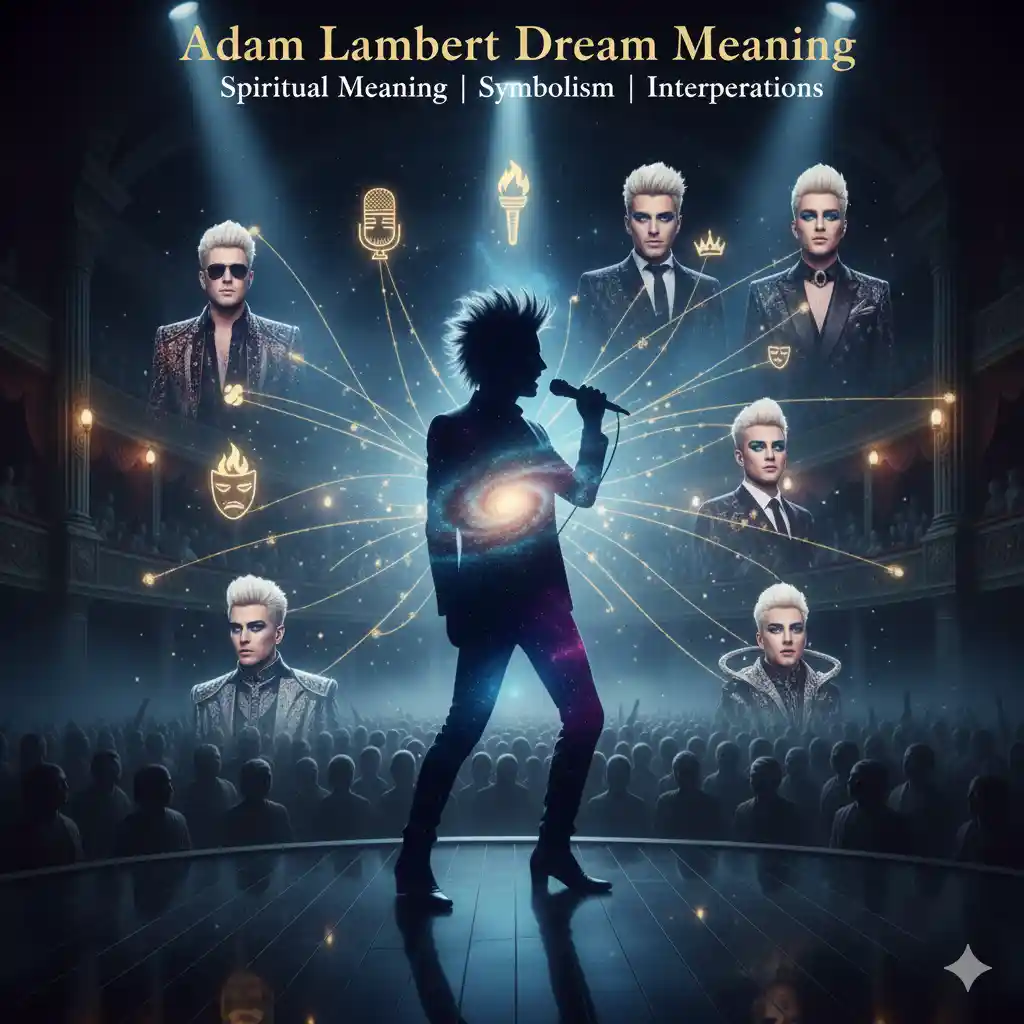
Table of Contents
- What the “Adam Lambert” Symbol Generally Suggests
- Psychological Perspectives on the Adam Lambert Dream
- 2.1 Persona, Performance and Cognitive Psychology
- 2.2 Emotional Cues, Audience Awareness & Body‑Language Signals
- Symbolic & Mythic Meanings of Adam Lambert in Dreams
- Spiritual Meanings: What Your Dream Might Be Inviting You To Express
- Real‑World Contexts: Work, Branding, Visibility & Message
- Behavioural Triggers: Why the Adam Lambert Motif May Appear Now
- How to Analyse Your Adam Lambert Dream: Reflection & Insight
- Bringing It into Waking Life: From Visibility to Authentic Presence
- FAQs: Deep Questions About Adam Lambert Dreams
- Conclusion – From Spotlight to Self: Aligning Your Unique Voice
1. What the “Adam Lambert” Symbol Generally Suggests
When Adam Lambert surfaces in your dream, the symbol tends to highlight themes of visibility, self‑expression and presentation. He is known for theatrical style, bold voice and dramatic presence. Dream‑wise, his appearance may signal that your inner system is processing how you are seen, what you reveal, and how you internalise your message. In professional settings—especially media, marketing or networking—the dream may emerge as you step into a new role or prepare to show more of yourself. The image of the performer invites you to consider: Are you performing for recognition or expressing for resonance? The dream taps into subtle communication, emotional cues and human interaction patterns—asking whether your outer presentation matches your inner state.
2. Psychological Perspectives on the Adam Lambert Dream
Let’s explore the internal workings of the dream: how cognitive psychology and relational dynamics play a role when you dream of Adam Lambert.
2.1 Persona, Performance and Cognitive Psychology
From a cognitive‑psychological perspective, dreaming of a high‑visibility figure like Adam Lambert often means your mind is rehearsing identity, role and agency. The performer persona stands for how you believe you must show up—perhaps under pressure to impress or deliver. If you dream of him on stage, you might be gearing up to take centre‑stage in your own life (brand launch, public presence, leadership). If you’re watching him rather than being him, you may feel external evaluation or comparison. The dream invites you to reconcile persona (the mask) with presence (the self). If your waking role includes video marketing, PR or social media, you may especially feel this tension between “what others see” and “what I feel”.
2.2 Emotional Cues, Audience Awareness & Body‑Language Signals
Another layer addresses emotional cues and body‑language signals. In the dream setting, notice how the performer is moving, his stance, his connection to the audience. These represent your internal non‑verbal communication: how you hold yourself publicly, how you respond to being seen, how you feel when people observe you. The dream might make you feel exhilarated, exposed, powerful or vulnerable. For example: a dream where you stand next to him and he invites you to sing may symbolise you stepping into your voice; a dream where he ignores you may reflect fears of invisibility. In interpersonal dynamics, this calls attention to how you read cues, how you send cues and how your subtle communication aligns with your internal message.
3. Symbolic & Mythic Meanings of Adam Lambert in Dreams
On the symbolic level, Adam Lambert becomes more than a person—he is an archetype of transformation, expression and authenticity. His path—from theatre to TV to international room‑filling performance—symbolises the journey from hidden talent to visible voice. Dreaming of him may mean you are ready (or are being prepared) to make that leap. If the scene is glamorous, you may feel optimistic about being seen; if backstage, the dream may point at preparation and internal work. The mythic message: you are not just playing a part—you are embodied in your stage. Recognising the pattern of human behaviour—you as performer, you as audience, you as observer—helps decode this symbol.
4. Spiritual Means: What Your Dream Might Be Inviting You To Express
Beyond psychology and symbolism, there is a spiritual dimension to this dream motif. The appearance of Adam Lambert may be your soul’s signal: to use your voice, to show up fully, and to stand in your truth. Spiritually, this may mean you have been hiding some facet of your fulfilment, anonymity or creative potential. The dream invites you to integrate your inner gift with outward expression—not just for acclaim, but for purpose and connection. It asks: when you are seen, is the message aligned with who you are? Are your subtle communications and emotional cues congruent with your essence? The stage metaphor becomes sacred: you are being asked to show up, not as a mask, but as authentic presence.
5. Real‑World Contexts: Work, Branding, Visibility & Message
Let’s apply this dream symbol to your real world—especially if you’re working in video marketing, PR, social media, networking and using AI in your work.
In content creation / brand presence:
If you’re prepping a big video, launching a campaign or refining your personal brand, you might dream of Adam Lambert as your subconscious mirror. Are you projecting the image you think the audience wants—or the one you truly are? The dream invites alignment of emotional cues, body‑language signals and message substance. A content‑creator I worked with reported a dream of standing backstage with him just before a show—she realised she felt more like crew than centre stage, and adjusted her messaging to reflect her true voice rather than the expected persona.
In networking / public speaking / client presentation:
When you’re exposed to networks, speaking engagements or public visibility, the dream may highlight how you show up among others. Are you competing, entertaining, or connecting? The performer symbol helps you reflect on whether your presence is being read as authentic or performative.
In role shifts or identity transition:
If you’re entering a new phase—leadership, higher visibility, new market—this dream often surfaces. It may come with tension or excitement. A professional I knew had this dream just before stepping into a C‑suite role: the dream of performing pointed at her internal readiness and the subtle cues she had to align.
Short numbered list: Real‑world triggers you may recognise
- Launching a public campaign, debuting content, or preparing for a big performance.
- Feeling visible (or anticipating visibility) and questioning your presentation vs authenticity.
- Managing multiple roles (creator, strategist, speaker) and feeling fragmented rather than unified.
6. Behavioural Triggers: Why the Adam Lambert Motif May Appear Now
Why would this motif appear at this time? Let’s explore behavioural triggers associated with subtle communication, emotional cues and human interaction patterns.
One trigger: a visibility inflection point. When you move from private to public or from supporting role to lead role, the mind uses the performer image to process the shift. Another trigger: tension between your internal voice and external presentation. If you’ve been presenting for approval rather than connection, your dream may highlight the discrepancy. A third trigger: readiness to claim your voice and message. The figure of Lambert becomes symbolic of stepping into full expression. Recognising these triggers helps you bring awareness to your subtle communication, emotional signals and interaction dynamics.
7. How to Analyse Your Adam Lambert Dream: Reflection & Insight
Here’s how you can reflect on and draw actionable insight from your dream.
Ask yourself:
- Were you standing with Adam Lambert, watching him perform, or were you him? What role did you occupy?
- What was the setting—stage, rehearsal room, audience area, behind the scenes? What area of your waking life does that parallel?
- How did you feel—energised, pressured, invisible, confident? Which emotional cues stood out?
- What were the body‑language signals—microphone, lights, crowd reactions, costume? How do those map to how you communicate in waking life?
- What message or scenario occurred—performance, collaboration, audience reaction? What is that mirroring in your waking work or relationships?
Journaling these responses helps you link your dream’s subtle communication, emotional cues and human interaction patterns to your real‑world roles. Then examine: where in your waking life are you performing? Where are you being?
8. Bringing It into Waking Life: From Visibility to Authentic Presence
Having interpreted and reflected on the dream, now translate the insight into action. Especially relevant for those in media, marketing, social networking and AI‑enabled workflows.
Here are practical steps:
- Select one upcoming piece of content, event or networking moment where you feel performance pressure. Ask: What is my true voice? Then draft it with your voice, not the expected mask.
- In your next appearance (video call, public talk, client pitch), observe your body‑language signals and emotional cues: Are you comfortable? Do you feel seen or performing? Adjust so your presence aligns with your truth.
- Review your brand persona: Are you projecting a version of yourself aimed at others, or a version rooted in your meaning? Make shifts toward the latter.
- Reflect on roles you inhabit (creator, strategist, consultant). Where do you feel most genuine? Shift acts toward those roles and offload those you play out of expectation.
- Set a simple mantra: “My voice matters. I show up in presence.” Use this before any public or visible interaction.
In a workshop I led, after a professional participant had this type of dream, we used it to redesign her upcoming presentation: she swapped out flashy animations and chose a more conversational tone aligned with her voice. The outcome: stronger engagement and less performance anxiety.
9. FAQs: Deep Questions About Adam Lambert Dreams
1. What if I dream I am Adam Lambert rather than seeing him?
If you embody him, it often means you are being invited to step into his attributes: voice, visibility, authenticity. It signals the readiness (or need) to express yourself more openly.
2. What if the dream involves him collaborating with others or being in a band?
That can indicate teamwork, shared visibility, or moving from solo presentation to collective stage. It may reflect your collaborative roles or networking presence.
3. Does the dream always mean I’m pursuing fame or recognition?
Not necessarily. While the figure is high‑visibility, the deeper meaning is about true expression and authentic connection—visibility is the metaphor, not the goal.
4. Could this dream reflect fear rather than aspiration?
Yes. If you felt anxious, exposed or pressured, it may be pointing to performance anxiety, fear of judgment or misalignment between your inner self and outer role.
5. How does this relate to my professional role in marketing or social media?
Directly. Your work involves presentation, audience, message, presence. The dream prompts you to ensure your public expression is aligned with your inner truth rather than being purely performative.
6. What if I feel invisible yet still dream of Adam Lambert?
Your dream might be prompting you to step into your visibility. The mind is projecting what you could become if you claimed your voice.
7. Should I change my style or brand after this dream?
You don’t need radical change, but consider fine‑tuning. Auditing how your brand voice, body language, message reflect your authenticity is advised.
8. What if the dream felt glamorous vs backstage or vulnerable?
Glamorous scenes may highlight aspiration and readiness to be seen; backstage or vulnerable scenes may indicate internal work needed before taking the external stage.
9. Will recurring dreams of Adam Lambert mean something deeper?
Recurrence suggests a sustained theme of visibility, identity and expression. It may signify an ongoing transition or role evolution.
10. How soon should I act on this dream’s insight?
Start with one concrete step this week: refine a message, adjust your presence, choose one area to align voice and being. Monitor how you feel and how others respond.
10. Conclusion – From Spotlight to Self: Aligning Your Unique Voice
In conclusion, dreaming of Adam Lambert is a rich and multi‑layered symbol. It brings together issues of performance, authenticity, visibility, subtle communication, emotional cues, body‑language signals and human interaction patterns. It asks: Are you stepping into your voice or hiding behind a persona? Are you aligning what you show with who you are?