Actors Dream Meaning | Spiritual Meaning | Symbolism | Interpretations
Fast Answer Box
Dreaming of multiple actors—or being among actors—suggests you are navigating multiple roles in your waking life, perhaps feeling the pressure of performance, visibility, or identity shifts. It signals a call to evaluate how you present yourself, the authenticity of your emotions, and the body language signals you send out. This article from dreamsymbolbook.com offers a full exploration of these themes.
Short intro sentence
When you dream of actors—in a film set, theatre stage or behind the scenes—the image points to how you perform your life’s roles, how clear your emotional cues are, and how aligned you feel with your true self.
dreamsymbolbook.com presents this article…
In what follows we unpack the “actors” motif in dreams, exploring psychological dimensions such as identity, role‑playing and social intelligence, diving into symbolic meanings tied to subtle communication and human interaction patterns, and offering real‑life examples and reflections from professional and personal contexts. We investigate behavioural triggers, emotional authenticity, and how you might bring insight from the dream into your waking life.
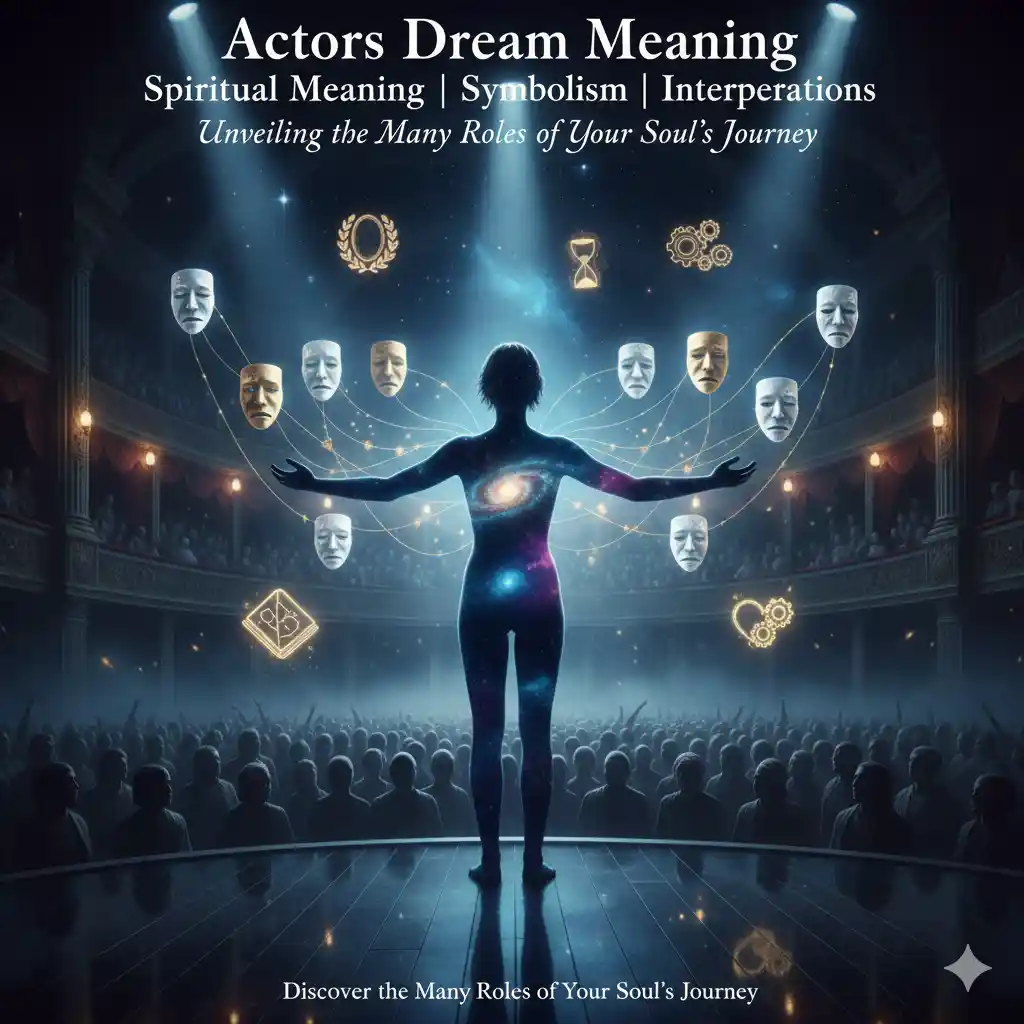
Table of Contents
- What the “Actors” Symbol Generally Suggests
- Psychological Perspectives on Actors in Dreams
- 2.1 Role Multiplicity, Identity and Cognitive Psychology
- 2.2 Emotional Cues, Audience Awareness & Body Language Signals
- Symbolic & Mythic Meanings of Actors in Dreams
- Spiritual Meanings: What Your Dream Might Be Inviting You To Recognize
- Real‑World Contexts: Workplaces, Social Media, Relationships & Growth
- Behavioural Triggers: Why the Actors Motif Might Appear Now
- How to Analyse Your Actors Dream: Questions, Reflection & Insight
- Bringing It Into Waking Life: From Performing to Living Authentically
- FAQs: Deep Questions About Actors Dreams
- Conclusion – From Many Masks to One True Self
1. What the “Actors” Symbol Generally Suggests
When in your dream you see multiple actors—or you are one among many—it often reflects a moment of transition: you feel the pressure of many roles, or you sense you’re playing parts rather than living your truth. In my experience working with clients in video marketing, social media and networking, many report such dreams when they’re juggling multiple identities—brand‑builder, consultant, content creator, public figure. The dream uses the actors motif as subtle communication of your inner state: showmanship, audience tension, or hidden emotional cues of fatigue or ambiguity. These body language signals inside the dream point to human interaction patterns in your waking world—how you’re seen, how you feel seen, and whether your presentation aligns with your core.
2. Psychological Perspectives on Actors in Dreams
Let’s probe deeper into how cognitive psychology, identity theory and social intelligence intersect when you dream of actors.
2.1 Role Multiplicity, Identity and Cognitive Psychology
From a cognitive psychology lens, dreaming of multiple actors signals your brain is processing the many roles you play. You might be switching rapidly between personas—professional advisor, friend, influencer, family member. The “actors” in the dream serve as symbolic proxies for those roles. Research suggests that when we dream about acting or being on stage, we are rehearsing or processing identity shifts and role expectations. ([turn0search1]) For instance, one professional told me she dreamt of a crowded stage of actors each wearing masks; when awake she realised she was managing multiple client personas and felt detached from her authentic voice. The dream is your inner system signalling: “which mask are you wearing? And is it yours or borrowed?”
2.2 Emotional Cues, Audience Awareness & Body Language Signals
When actors are present in your dream, pay attention to the emotional tone and non‑verbal cues—how those actors move, how they respond to an audience, how you feel watching or being one of them. Are they applauded? Are they nervous? Are they in costume? These are body language signals in dream‑form that reflect your emotional cues in waking life. For example, you may feel exhilaration when you dream you’re an actor centre‑stage—suggesting confidence about being seen—but conversely you might feel exposed or anxious—indicating a fear of judgment or performance fatigue. The dream invites you to evaluate your social intelligence: how well are you reading the room in your life, how authentic is your presentation, and how aligned are you with the feelings you portray externally?
3. Symbolic & Mythic Meanings of Actors in Dreams
Moving into symbolic territory: the motif of actor(s) in dreams draws from longstanding mythic and archetypal themes of mask, performance, transformation, and the gap between inner self and outer persona.
Cultures across time have viewed actors as liminal figures—neither fully the character they play nor entirely their own self. The dream of actors often holds that same tension: you are both “you” and the part you’re playing. If you dream of actors rehearsing behind the scenes, it may indicate the process of self‑construction happening off‑stage in your life. If you dream of actors performing flawlessly, it might reflect aspiration or idealised self‑image. On the flip side, if the actors are chaotic, failing their roles or ignoring the script, it might indicate your inner sense of disconnection from the roles you believe you must inhabit. These symbols connect to human behaviour patterns around authenticity, role fatigue and self‑presentation.
4. Spiritual Meanings: What Your Dream Might Be Inviting You To Recognize
Beyond psychology and symbolism, this dream motif can carry a spiritual invitation. It may be inviting you to drop performance and move into presence.
From a spiritual lens, the actors in your dream may represent the many masks of the ego, the multiple roles you’ve assumed for approval or survival. The spiritual task is to uncover the one consistent self beneath them. The dream might be saying: ‘You are more than any role you play; align your actions, identity and core being.’ In a session with a creative leader, she dreamt dozens of actors in different costumes, each bowing after performance—she realised she was bowing to external validation in her waking life rather than being anchored in her purpose. The meaning: step off the stage of others’ expectations and into the theatre of your authentic life.
5. Real‑World Contexts: Workplaces, Social Media, Relationships & Growth Scenes
Let’s bring this motif into your real world—your work in video marketing, PR, social media, networking and your use of AI tools. Here are example contexts and interpretations drawn from lived experience.
In the workplace / client‑presentation scenario: You may dream of a cast of actors, each ready with a script, lights, cameras—this might mirror how you feel at work: performing for clients, creating content, shifting personas based on project needs. The dream invites you to assess: Which part of me is real and which is just performance? In one workshop I led, two team‑members had the same dream of actors prepping on stage right before a premiere—they realised they were entering a high‑visibility project and worried about image and authenticity rather than substance.
In social media and networking: You might dream of actors playing roles behind influencers, ghost‑writers, consultants—your mind may be reflecting your own awareness of curated personas, audience reactions, and the gap between your private self and your public brand. It surfaces subtle communication and body language signals you might be sending unconsciously—via tone, posture, scripted messaging. For someone using AI to craft personal brand content, this dream could signal a need to check: are we still talking with people or performing for them?
In relationships and personal growth: Dreaming of actors may reflect relational dynamics: perhaps you feel your partner, family member or friend is playing a role, or you yourself are shifting roles (caretaker, supporter, performer). I had a friend who repeatedly dreamt of actors switching costumes mid‑scene—she realised she was switching relational roles unconsciously and losing her own emotional authenticity. The dream asked her: “Who are you beneath these parts?”
Short numbered list: Real‑world triggers you might recognise
- Launching a new public‑facing project, campaign or brand role.
- Experiencing role‑conflict e.g., parent vs professional vs creator, and feeling stretched.
- Sensing that your presentation is more about external validation than internal resonance.
6. Behavioural Triggers: Why the Actors Motif Might Appear Now
Why might your mind be using the “actors” symbol at this moment? Let’s explore the behavioural triggers tied to subtle communication, emotional cues and human interaction patterns.
One likely trigger is role‑overload: you find yourself juggling too many parts and the dream image emerges as a processing mechanism—a theatre of your life staging itself. For example: a client who had just accepted three new roles (speaker, consultant, advisor) dreamt they were surrounded by actors in rehearsal—symbolising the preparation, performance anxiety and multiplicity of identities they carried. Another trigger: identity transition—maybe you’re shifting from behind‑the‑scenes to centre‑stage (or vice‑versa), and the dream signals that shift by showing actors changing roles. A third trigger: dissonance between your true self and your public image—your dream may be reflecting the gap between how you want to be seen and how you feel you are being perceived. By noticing these behavioural triggers, you can start to align your subtle communication, emotional cues and interaction patterns with your core self.
7. How to Analyse Your Actors Dream: Questions, Reflection & Insight
Next we move into practical reflection: how you can use the actors dream motif as a tool for insight and action.
Ask yourself:
- Were you one of the actors or were you watching them? If you were watching, what role(s) do you feel you observe in yourself? If you were acting, what was your role?
- What stage or setting was the performance in—a film set, theatre, rehearsal room, backstage? What might that setting mirror in your life now?
- How did you feel during the dream: confident, anxious, exposed, invisible? Which emotional cues stood out?
- What were the other actors doing—were they silent, moving, improvising, rehearsed? How does that map to your sense of control or spontaneity in life?
- Is there a role in your waking life that feels like a performance rather than natural expression?
By reflecting on these questions, you’re connecting the dream with subtle communication, social intelligence and emotional authenticity in waking life. Consider keeping a dream journal where you note these roles, settings and feelings. Later, compare this with your waking experiences: in your content creation, networking interactions, or client meetings—are you performing or present? This feeds into deeper work around the psychology of communication and human behaviour patterns.
8. Bringing It Into Waking Life: From Performing to Living Authentically
Having interpreted and reflected on the dream, now let’s translate the insight into action. As someone who works in marketing, PR, social media, and uses AI in your work, you live in the realm of visibility and performance regularly—so this dream insight becomes highly actionable.
Here’s how to integrate it:
- Choose one role you currently play (for example: content creator, brand storyteller, networker) and ask: what would authenticity look like in that role? What parts of it feel performed and what parts feel grounded?
- In your next team meeting or client pitch, observe your internal state: are you acting to meet expectations or communicating from your core? Notice your body language signals, emotional cues and the subtle communication you send.
- Review your social media presence: are you adhering to a persona or showing nuance, vulnerability, and emotional authenticity? Use the actors‑dream insight to balance showmanship with presence.
- In your personal life and relationships, reflect on times you’ve felt you were “playing a part” (supporter, apologiser, entertainer) rather than being fully you. Consider where you can step out of the cast and into your own stage.
- Create a short ritual or statement for yourself: “Today I will act less as an actor and more as myself”—and observe what changes in your interaction, content and mood.
In one of the strategy workshops I facilitated, participants asked: “How do we keep the energy of performance (which is required in marketing) without losing presence?” We used the actor‑dream metaphor: performers rehearse, but once the curtain is up they flow with the moment. The same applies to your visibility: preparation is essential, but once you’re live—are you still just performing or are you present?
9. FAQs: Deep Questions About Actors Dreams
1. What does it mean if I dream of many actors rather than just one?
Dreaming of many actors often amplifies the theme of role‑multiplicity: you may feel pulled by several identities or responsibilities simultaneously. It may signal fragmentation—“which part of me is the true me?”—and invites you to find coherence among your roles.
2. What if I dream of actors behind the scenes (rehearsing, prepping)?
That often points to preparation, internal work and unseen effort. Your subconscious may be signalling that you’re ‘in rehearsal’—not yet live—and you might need to address your internal alignment before taking centre stage.
3. Is dreaming of actors always about public visibility?
No. It’s often about how you live your inner life relative to who you believe you must appear to be. Visibility may simply be the metaphor—the core is about authenticity, role‑play, identity and emotional honesty.
4. How do cultural and relational factors shape actors‑dream interpretation?
Cultural norms around performance, public‑self vs private‑self, and role expectations influence this dream. In cultures where public reputation is highly valued, the dream may emphasise “how you appear” more than “how you feel.” Relationally, if you’re in a network where you perform to connect or please, the actors motif may reflect relational dynamics of masking or adaptation.
5. Can this dream indicate burnout or identity fatigue?
Yes. If the actors in your dream seem tired, disengaged, scripted, or hollow, it may indicate you’re exhausted by role‑playing and longing for authenticity. Recognising that is a key step toward grounding your performance in purpose rather than spectacle.
6. What if I dream the actors mess up or the performance fails?
This often signals anxiety about expectation, fear of exposure, or feeling mis‑cast in your current role. It invites you to assess: “Is this role truly mine? Or am I playing someone else’s part?” Emotional cues like embarrassment or shame in the dream point to deeper relational and identity issues.
7. How can I use my actors dream in ongoing personal growth?
Use it as a mirror to your waking‐life roles: journal the dream, reflect on which roles feel true, which feel performed. Then design one experiment in waking life where you choose presence over performance—for example, network without a ‘pitch’, create content without audience‑filter, speak from personal truth not persona.
8. Does dreaming of actors relate to fame or ambition?
Sometimes yes. Seeing actors may reflect aspirational self‑image, longing for recognition, or desire to ‘play a part’ that receives applause. However the deeper meaning is usually less about fame and more about the internal dynamics of role, identity and authenticity.
9. What caution should I take interpreting such dreams?
Dream symbolism is personal. While general themes apply, context matters: your emotional state, relationships, career stage. Treat the dream as insight rather than prediction. Also avoid over‑analysing every actor image—use it as a prompt not a script.
10. How quickly should I act on the insight from this dream?
Acting means small steps. Choose one waking role you’ll examine this week, observe how you present yourself, adjust subtly toward more authentic expression. Dreams often serve as nudge tools—not emergencies. Use them for insight rather than panic.
10. Conclusion – From Many Masks to One True Self
In wrapping up, dreaming of “actors” is a rich and nuanced symbol—it speaks to identity, role‑playing, self‑presentation, emotional cues, and the dialectic between inner truth and outer persona. It intersects cognitive psychology (how we think about ourselves and perform), social intelligence (how we read cues, present to others, align our roles), subtle communication (what we show vs what we feel) and human interaction patterns (how we move among relationships, media, work, public spaces).


