Resentment Dream Meaning – Spiritual Meaning | Symbolism | Interpretations
Fast Answer: Resentment Dream Meaning
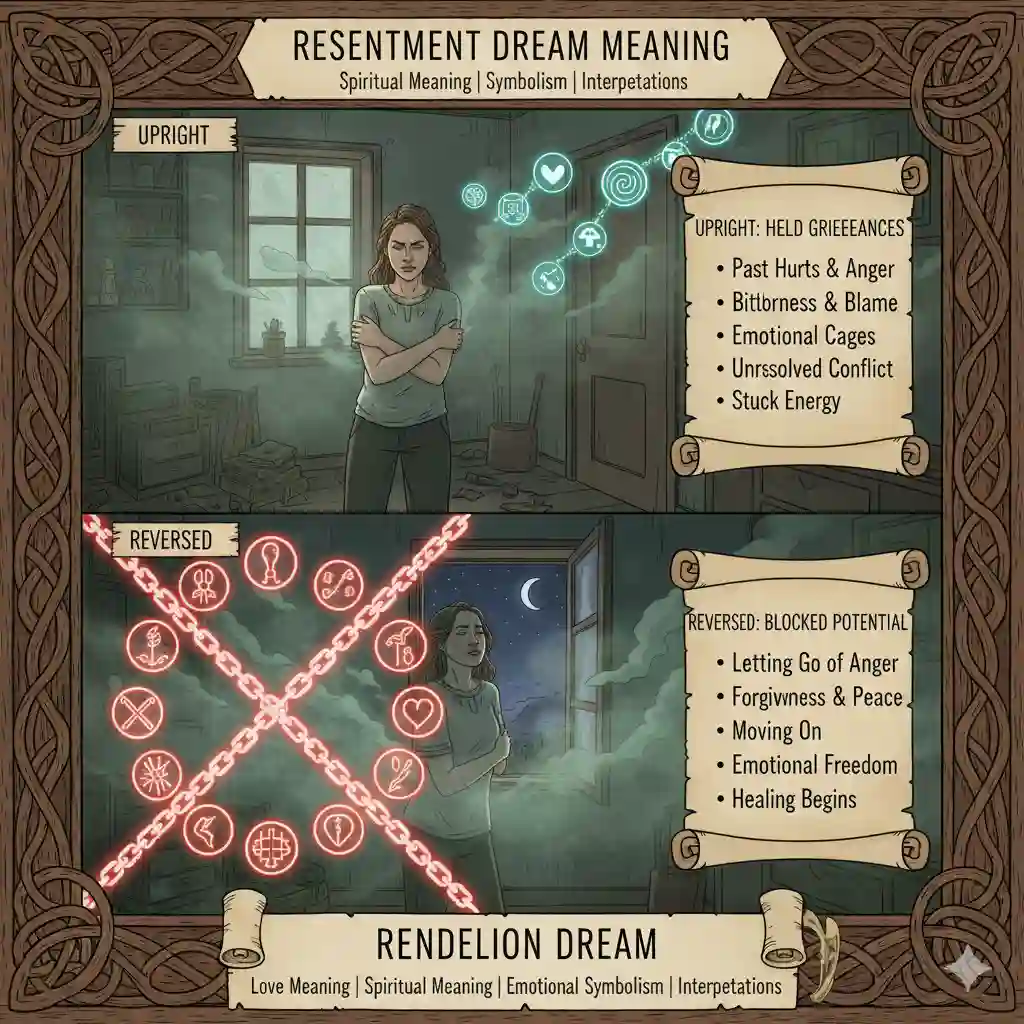
Dreams about resentment symbolize unexpressed anger, unresolved emotional pain, or lingering feelings of injustice. These dreams are not predictions of future conflict or signs of moral failure; rather, they reflect inner tension and emotional truth seeking release. While explosive rage in dreams often signifies an immediate reaction to a threat, resentment represents a slower, heavier accumulation of emotion—a quiet signal from the subconscious that something within you has been swallowed, silenced, or carried for too long. To dream of resentment is to be invited into a space of honest self-reflection, asking you to acknowledge where your boundaries have been crossed or where your voice has been suppressed.
Introduction: Why Resentment Appears in Dreams
Resentment is one of the most complex and layered emotions the human psyche experiences. Unlike the hot, fast burn of anger, resentment is cold, slow, and persistent. It is the emotion of memory—the feeling of re-living a wrong, re-feeling a sting, and holding onto a narrative of unfairness. When this emotion surfaces in a dream, it is often because the conscious mind has become too adept at hiding it.
In our waking lives, we often suppress resentment to maintain peace, preserve relationships, or uphold a self-image of being “good” or “forgiving.” We swallow small indignities, ignore minor boundary violations, and smile through discomfort. However, the subconscious mind keeps a perfect scorecard. It stores every unexpressed objection and every swallowed truth.
Dreams serve as a safe container for these stored emotions. In the landscape of the dream, the social rules that govern our waking behavior are suspended. Here, the “shadow” feelings—those we deem unacceptable or dangerous—are allowed to breathe. The appearance of resentment in a dream is not an accusation; it is a revelation. It signifies that the emotional vessel is full and needs to be emptied. It is a compassionate signal from the psyche that the cost of silence has become too high, and that true peace can only be found through acknowledging the turmoil beneath the surface.
Spiritual Meaning of Resentment in Dreams
Spiritually, resentment is viewed not as a sin, but as a blockage—a stagnation of the vital life force that is meant to flow freely through the soul. When we dream of resentment, we are encountering pockets of “stuck” energy within our spiritual body.
Resentment as a Soul-Level Signal
From a spiritual perspective, emotions are meant to be e-motions—energy in motion. They arise, deliver their message, and pass through. Resentment occurs when that flow is arrested. A resentment dream is a soul-level signal indicating that you are holding onto an energy that no longer serves your growth. It is an invitation to examine where you are tethered to the past through the cord of a grievance.
Energetic Stagnation Caused by Emotional Holding
Just as a dam stops the flow of a river, resentment stops the flow of spiritual vitality. In dreams, this often manifests as a feeling of heaviness, being stuck, or an inability to move or speak freely. The dream is illustrating the spiritual cost of holding onto old wounds. It shows that by clutching the hot coal of resentment, you are burning your own hand, not the person who offended you.
The Spiritual Lesson of Forgiveness vs. Self-Betrayal
Many people spiritually bypass their anger, forcing themselves into “forgiveness” before they have truly acknowledged the hurt. Resentment dreams often appear when this premature forgiveness has occurred. The dream is a reminder that true spiritual forgiveness cannot happen if it involves self-betrayal. You must first honor the part of you that was hurt before you can release the wound. The dream asks for authenticity before transcendence.
Returning Power Through Awareness
Resentment is often a response to feeling powerless or victimized. By bringing this emotion into the light of dream consciousness, your spirit is reclaiming its power. To see the resentment clearly is the first step in transmuting it. The dream is a sign that you are ready to take back the energy you have leaked into old stories and use it for your own healing and creation.
Psychological Interpretation of Resentment Dreams
Psychologically, resentment is the guardian of the unacknowledged self. It stands at the gateway where our needs meet the world’s demands. Dreaming of this emotion suggests a deep psychological process of uncovering where personal agency has been compromised.
Repressed Anger Patterns
Resentment is often described as “anger with a history.” It is anger that has been denied expression so many times that it has calcified into bitterness. Dreams about resentment point to a pattern of repression. They suggest that the dreamer may have learned, perhaps in childhood, that expressing anger was unsafe or unlovable. The dream is a mechanism for the psyche to discharge this built-up pressure safely.
Attachment Wounds and Unmet Needs
Often, resentment in dreams is not about a specific recent event, but traces back to deeper attachment wounds. It symbolizes the pain of unmet needs—the longing to be seen, heard, or cared for that went unanswered. The dream figure who is the target of the resentment may be a stand-in for a parent, a past partner, or society at large. The dream is highlighting a deficit in emotional nourishment that the psyche is desperate to fill.
Passive Emotional Coping Mechanisms
Resentment is the signature emotion of passivity. It arises when we feel we cannot act to change our circumstances, so we retreat into internal stewing. A resentment dream meaning often centers on this passivity. It challenges the dreamer to move from a passive position (“They did this to me”) to an active one (“I will no longer accept this”). It is a call to psychological maturation and assertiveness.
Long-term Emotional Accumulation
Unlike a sudden fright or a flash of irritation, resentment in dreams speaks to the long game. It represents months, years, or even decades of accumulation. This is why these dreams often feel heavy, exhausting, or deeply sad. The psyche is revealing the sheer weight of what is being carried, asking the conscious mind, “How much longer do you wish to bear this load?”
Resentment as a Shadow Emotion
In Jungian psychology, the “Shadow” consists of the parts of ourselves we hide, deny, or reject. Resentment is a classic shadow emotion because it contradicts the image most of us like to hold of ourselves as fair, kind, and “over it.”
Shadow Anger Hidden Beneath Calm Behavior
The shadow resentment meaning in dreams is potent. It reveals the discrepancy between your public persona and your private reality. You may be the peacemaker in your family or the reliable employee at work, yet your dreams are filled with seething bitterness. This is the Shadow speaking. It says, “I am not fine. I am furious.” This is not a sign of hypocrisy, but of human complexity. The dream is integrating these two halves, preventing the Shadow from acting out in destructive ways in waking life.
Fear of Confrontation
Resentment thrives in the shadow of fear—specifically, the fear of direct confrontation. The dream may reveal a scenario where you are unable to speak your truth or where you are silently judging others. This reflects a Shadow aspect that is terrified that asserting boundaries will lead to abandonment or conflict. The dream allows you to experience the anger safely, without the real-world consequences you fear.
Moral Self-Image vs. Emotional Reality
We often repress resentment because we judge it as “bad” or “petty.” We tell ourselves we should be bigger than that. The dream confronts this moral superiority. It forces you to look at the “petty” part of yourself with compassion. By accepting that you—like everyone else—are capable of holding a grudge, you dissolve the power of the Shadow. Integration comes not from being perfect, but from being whole, which includes accepting your capacity for bitterness.
Common Resentment Dream Scenarios
The way resentment manifests in a dream narrative provides crucial clues to its specific source and meaning.
Feeling Bitterness Toward Someone
Dreaming of feeling bitter toward a specific person (friend, partner, parent) does not necessarily mean you are angry with them in waking life, though it might. Often, this person represents a quality or a part of your life where you feel shortchanged. If you resent a partner in a dream, it may symbolize resentment toward the compromises you have made in love, or a loss of your own independence, rather than their specific actions.
Holding Anger Without Expressing It
A very common scenario involves feeling intense anger or resentment in the dream but being unable to speak, scream, or act. You might be paralyzed or voiceless while someone treats you unfairly. This is a direct symbol of suppressed anger dream patterns. It mirrors the waking experience of self-silencing. The frustration felt in the dream is the psyche’s way of urging you to find your voice in the waking world.
Watching Someone Succeed While Feeling Resentful
Dreams where you watch another person receive accolades, love, or money while you simmer with resentment are linked to feelings of unworthiness or comparison. This is often connected to jealousy dream meaning, but with a heavier, more resigned tone. It reflects a belief that the world is unfair or that your own efforts are going unrecognized. It asks you to examine where you feel invisible.
Replaying Unfair Situations
Sometimes the dream simply replays a memory of an injustice—a time you were fired, dumped, or insulted. This loop indicates that the emotional processing of that event was never completed. The resentment is “stuck” in the memory. The dream is looping it not to torture you, but to offer you another chance to feel the feelings fully so they can finally be released.
Smiling Outwardly While Feeling Inner Resentment
This is the quintessential mask dream. You are at a party, a dinner, or a meeting, smiling and nodding, while internally you are screaming or filled with bile. This scenario highlights the disconnect between your social mask and your inner truth. It is a warning from the subconscious that this level of inauthenticity is draining your vital energy and causing internal anxiety.
Emotional Tone of Resentment Dreams
The specific flavor of the emotion in the dream is as important as the plot. Resentment is rarely just “mad”; it is a cocktail of feelings.
- Bitterness: A sharp, acidic feeling in the dream suggests that the resentment has turned inward and is “souring” your outlook. It implies a cynicism that needs healing.
- Sadness: Often, resentment in dreams is layered with profound grief. You are resentful because you are hurt. This tone points to the vulnerability beneath the armor of anger.
- Quiet Rage: This is a cold, silent fury. It is dangerous because it is so controlled. It suggests a high level of repression and a need for a safe outlet, perhaps linking to rage dream meaning but in a frozen state.
- Emotional Heaviness: If the primary sensation is weight—feeling dragged down, tired, or burdened—the resentment is operating as a depressant. It is exhausting your spirit.
- Moral Conflict: Feeling resentful but also guilty about the resentment indicates an internal war. You are judging yourself for your feelings. The dream asks for self-compassion.
Resentment Dreams & Boundaries
At its core, resentment is almost always a symptom of a boundary violation. When we say “yes” when we mean “no,” we generate resentment.
Chronic Boundary Crossing
If you dream of people walking into your house without knocking, taking your things, or speaking over you while you feel resentment, your psyche is screaming about boundaries. You are allowing others to encroach on your psychological or physical space. The resentment is the alarm bell that the fence is broken.
Over-giving and Under-receiving
Dreams of serving others—cooking for them, cleaning for them, carrying their luggage—while feeling resentful reflect an imbalance in reciprocity. This is common for caregivers and people-pleasers. The dream is highlighting the exhaustion of over-giving. It asks: Where are you pouring from an empty cup?
People-Pleasing Patterns
The “fawn” response in trauma involves pleasing the aggressor to stay safe. Resentment is the aftertaste of fawning. If you dream of being overly nice to someone you dislike, it exposes a survival strategy that is no longer working. The dream encourages you to risk being “disliked” in favor of being respected.
Emotional Self-Abandonment
Ultimately, the boundary violated is often the one with yourself. When you ignore your own intuition or needs to keep the peace, you abandon yourself. The resentment felt in the dream is actually directed at the self—resentment that you did not protect your own identity.
Resentment vs Rage in Dreams
While they are cousins in the emotional family, resentment and rage operate differently in the dreamscape.
Slow-Burning vs. Explosive
Rage in dreams is often explosive, violent, and chaotic. It is fire. Resentment is ice or stone. It is slow, heavy, and enduring. Rage is a scream; resentment is a clenched jaw.
Suppression vs. Expression
Rage dreams often involve the release of anger—breaking things, fighting, screaming. They are cathartic. Resentment dreams often involve the containment of anger—seething silence, passive-aggressive remarks, or feeling trapped.
What Each Type Is Teaching
Rage dreams teach you about your raw power and your defense instincts. They relate closely to anger dream meaning. Resentment dreams teach you about your endurance, your boundaries, and your unvoiced needs. They ask you to look at the long-term patterns of your life rather than just the immediate threats.
Emotional Healing Through Resentment Dreams
It may feel unpleasant, but a resentment dream is a positive sign of healing potential. It brings the poison to the surface so it can be expelled.
Awareness Before Release
You cannot heal what you do not feel. By allowing you to feel the full extent of your bitterness in the safety of sleep, the dream breaks the denial. This awareness is the first step toward release. You wake up knowing, “I am still holding onto this.”
Healthy Emotional Expression
The dream is a prompt to find a healthy outlet in waking life. This might mean journaling about the grievance, having a difficult conversation, or physically releasing the energy through exercise. The dream is pushing the energy up so you can move it out.
Reclaiming Voice and Agency
Healing resentment requires moving from victimhood to agency. The dream shows you where you feel powerless so you can decide to take power back. This might mean setting a boundary you were afraid to set or simply deciding to stop waiting for an apology that will never come.
Compassionate Self-Honesty
The ultimate healing comes from admitting the truth without judgment. “I resent my mother.” “I resent my children.” “I resent my boss.” These are hard truths to admit. The dream creates a space where these truths can exist without destroying your self-concept.
What This Dream Is Asking You to Acknowledge
When you wake from a dream of resentment, do not brush it aside. Use it as a tool for inquiry. Ask yourself:
- What emotion have you been swallowing? Where in your life are you biting your tongue?
- Where do you feel treated unfairly? Is there a relationship where the scales are consistently tipped against you?
- What truth remains unspoken? Is there something you need to say, even if your voice shakes?
- Which boundary needs reinforcement? Where do you need to say “no” to protect your own energy?
- Where are you waiting for permission? Are you resenting others for doing what you wish you could do? This often links to control dream meaning, where resentment arises from a lack of perceived control over one’s own life.
Deep Spiritual Message of Resentment Dreams
Resentment in dreams is not a flaw or a sign of spiritual regression—it is a quiet messenger. It arrives to tell you that your soul is tired of carrying heavy bags that do not belong to it. It asks you to reclaim emotional truth, restore balance, and release what has been carried too long. The dream is a promise that on the other side of this heavy, cold emotion lies a lighter, freer, and more authentic version of yourself. It is the darkness before the dawn of true forgiveness—forgiveness that is earned through honesty, not forced through silence.
Frequently Asked Questions (FAQs)
1. What does resentment symbolize in dreams?
Resentment in dreams symbolizes suppressed anger, unresolved emotional wounds, and feelings of unfairness or injustice. It reflects inner tension where you have silenced your own needs or allowed your boundaries to be crossed without objection.
2. Is resentment different from anger in dreams?
Yes. Anger in dreams is often active, hot, and reactive—a response to an immediate threat or frustration. Resentment is passive, cold, and enduring—it represents accumulated emotion, long-held grudges, and the memory of past hurts that have not been processed.
3. Why do resentment dreams feel so heavy and draining?
These dreams feel heavy because resentment itself is a heavy energetic burden. It requires immense psychological energy to repress and carry old grievances. The dream allows you to feel the actual weight of what you are holding onto in your subconscious.
4. Can resentment dreams signal emotional healing?
Absolutely. You cannot heal what you refuse to acknowledge. By bringing suppressed resentment to the surface, the dream is initiating the healing process. It is moving the emotion from the shadow into the light where it can be addressed and released.
5. How do I release resentment after a dream?
Start by acknowledging the feeling without judgment. Journaling is powerful—write down exactly what you are resentful about and why. Validate your own feelings. Then, consider if there is a boundary you need to set or a conversation you need to have. Physical movement can also help move the “stuck” energy.
6. Do these dreams mean I am a bitter person?
No. Everyone experiences resentment. Dreaming of it does not define your character; it describes your current emotional state. It means you are human and have been hurt. Acknowledging it actually prevents you from becoming a bitter person, as it allows the emotion to flow rather than stagnate.
7. Why do I dream of resenting someone I love?
It is common to hold resentment toward those we love most because our lives are so intertwined. You may resent a partner or parent for unmet needs, sacrifices you’ve made, or unspoken expectations. This dream is asking you to address the friction in the relationship so love can flow freely again. This often connects to animosity dream meaning.
8. What if I dream of someone resenting me?
Dreaming that someone else is resentful toward you can symbolize your own guilt or fear that you have wronged someone. Alternatively, it can represent a projection—you may be the one feeling resentful, but your psyche projects it onto another character to make it safer to view.
9. Can resentment dreams be about myself?
Yes. You can resent yourself for past mistakes, missed opportunities, or for not standing up for yourself. This is often the most painful type of resentment. The dream is a call for self-forgiveness and a shift in how you treat yourself.
10. What does it mean if I can’t speak in the dream while feeling resentful?
This is a classic symbol of suppressed voice. It means you feel unable to express your truth or defend yourself in waking life. It highlights feelings of powerlessness and the need to practice assertiveness.
11. Are resentment dreams related to my job?
Workplace resentment is a very common trigger. If you feel undervalued, underpaid, or ignored at work, these feelings will often surface in dreams as scenarios of injustice or bitterness. It may be a sign to reassess your career boundaries.
12. How does resentment relate to “Shadow” dreams?
Resentment is a primary “Shadow” emotion because it is often socially unacceptable to express. Dreams about it are shadow emotion dreams that invite you to integrate these rejected parts of yourself to become more whole and authentic.
13. Why does the resentment in my dream feel so old?
Because resentment is the emotion of memory. It does not just live in the present; it is anchored in the past. An “old” feeling in a dream suggests you are processing a core wound or a pattern that has existed for a long time, possibly since childhood.
14. Can resentment dreams be a warning?
They are a warning about your internal state, not an external event. They warn you that your “emotional cup” is full and that continuing to suppress your feelings will lead to burnout, anxiety, or an eventual explosion of anger.
15. What is the spiritual antidote to resentment in dreams?
The antidote is truth and compassion. Spiritually, the dream asks you to honor your own truth (that you were hurt) and then to view the situation with compassion for yourself and, eventually, for the other. It is about releasing the energetic cord that binds you to the pain.