Dream About Sudden Sadness in a Dream – Spiritual Meaning | Symbolism | Interpretations
Fast Answer: Dream About Sudden Sadness
Dreaming about sudden sadness symbolizes unprocessed emotions, profound emotional release, inner sensitivity, subconscious grief, and the soul gently bringing hidden feelings into awareness for healing and integration.
It is vital to understand that this sadness is a messenger, not a weakness. Unlike waking life, where we often categorize sadness as a negative state to be fixed, in the dream realm, it functions as a necessary cleansing mechanism. A dream about sudden sadness in dream states is rarely a prediction of future tragedy. Instead, it is an invitation from your deeper self to feel, honor, and release what you have been carrying. It signifies that you are safe enough now to process emotions that may have been too heavy to handle in your waking hours.
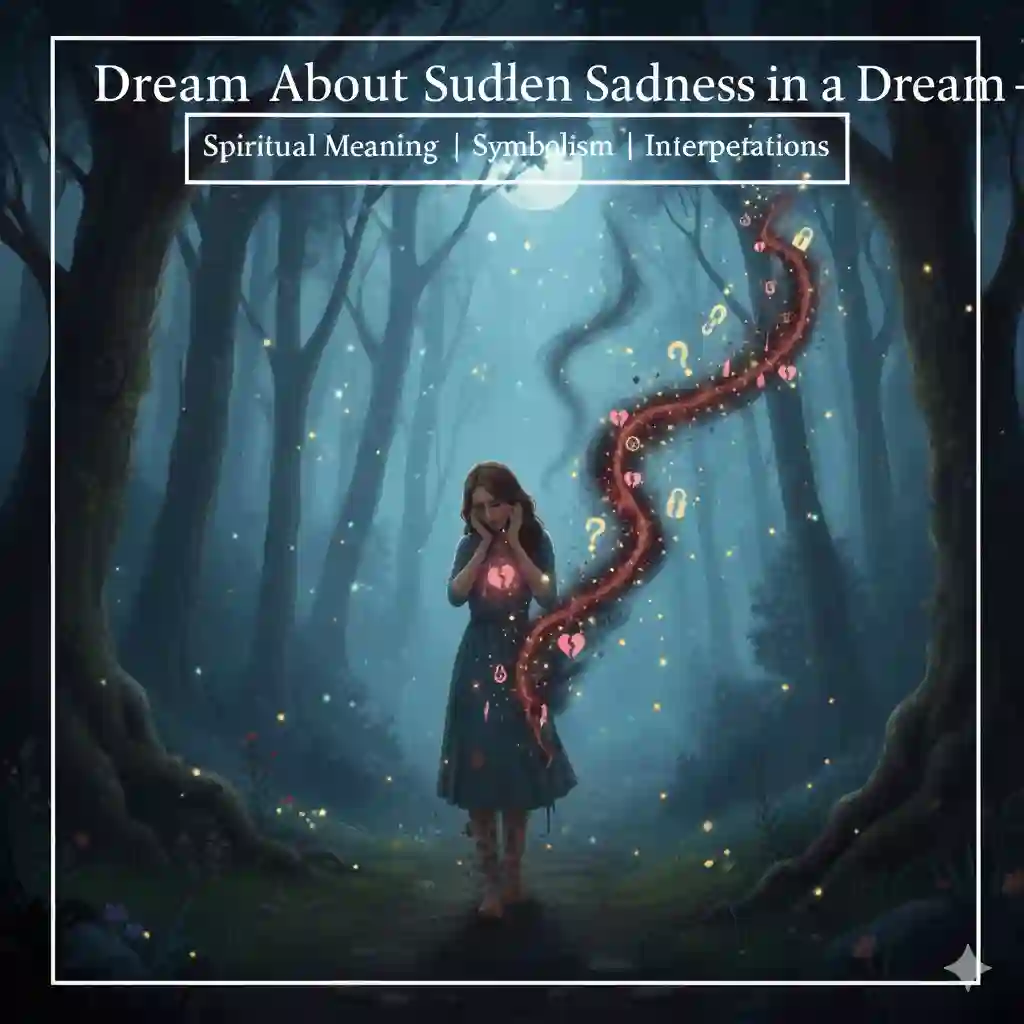
Introduction: Why Sadness Appears Without Warning in Dreams
Waking up with tears on your cheeks or a heavy heart after a dream can be a disorienting experience, especially if the dream itself didn’t seem particularly tragic. You might find yourself wondering why a wave of melancholy washed over you while you slept. This phenomenon occurs because emotions in dreams often bypass the logical barriers we erect during the day. In our waking lives, we are masters of suppression; we stay busy, we rationalize our feelings, and we push down grief to remain functional.
However, the subconscious mind does not abide by these social rules. It understands that emotions are energy in motion, and when that motion is arrested, it creates internal blockages. Sudden sadness in a dream is the dam breaking. It is your psyche’s way of expressing what your conscious mind has been too distracted or too afraid to acknowledge.
Dreams act as emotional regulation spaces. Just as a thermostat adjusts the temperature of a room, your dreams adjust your emotional equilibrium. If you have been running on adrenaline or feigning happiness, your dream may introduce sudden sadness to restore balance. This uninvited guest is actually a healer, arriving to ensure that your emotional landscape remains fluid and healthy rather than stagnant and repressed.
Spiritual Meaning of Sudden Sadness in Dreams
On a spiritual level, experiencing sudden sadness in a dream is akin to a sacred rainstorm. It represents an emotional cleansing of the soul. Water, in all its forms, is the universal symbol of emotion and spirit. When sadness arrives suddenly in the dream state, it suggests that your spirit is washing away the dust of daily life, accumulated stress, and the subtle hardening of the heart that occurs when we protect ourselves too fiercely.
The spiritual meaning of sadness in dreams often points to a compassion awakening. To feel deeply is a spiritual gift. It indicates that your heart chakra is opening, allowing you to connect more profoundly not just with your own inner child, but with the collective human experience. You may be processing not only your own personal grief but also sensing the heavier energies of the world around you, transmuting them through the safety of sleep.
This dream can also symbolize the art of letting go. We often carry emotional weight—old disappointments, quiet regrets, unspoken goodbyes—like invisible stones in our pockets. The sudden onset of sadness is the spiritual signal that you are ready to set these stones down. It is the alchemy of grief transforming into wisdom. The soul knows that to rise, it must first be light, and this sadness is the process of shedding the density that keeps you tethered to the past. It is a softening of the heart, a return to emotional honesty that is essential for true spiritual growth.
Psychological Interpretation of Sudden Sadness Dreams
From a psychological perspective, a dream about sudden sadness in dream scenarios is a classic indicator of the “return of the repressed.” Freud and Jung both understood that what we banish from our waking thoughts will inevitably find a way back through the back door of our dreams. If you pride yourself on being “strong” or “stoic,” your psyche may use the dream state to compensate for this lack of emotional expression.
This phenomenon can also signal emotional overload or burnout. We live in a culture of high performance and constant input. Your brain may be exhausted from processing information and maintaining a composed facade. The sudden sadness is a release valve, a physiological and psychological necessity to prevent a total system crash. It’s the mind’s way of saying, “We need to slow down; we need to feel.”
Furthermore, this dream theme often relates to delayed grief. Grief is not a linear process with an expiration date. You may think you have “gotten over” a loss—whether it be a death, a breakup, or a lost opportunity—only to have sadness surge up months or years later in a dream. This is not a regression; it is a deepening. Your mind is revisiting the memory because you now have the capacity to process a layer of it that was previously inaccessible. It suggests a sensitivity to unresolved memories that are asking for a final, gentle acknowledgement before they can be fully integrated.
Symbolic Meaning of Sadness in Dreams
The way sadness manifests in your dream provides specific clues to what your subconscious is trying to communicate. The nuances of the imagery can help decode the source of the emotion.
| Dream Symbol | Emotional & Spiritual Interpretation |
|---|---|
| Crying suddenly | Symbolizes an urgent need for release. This is the breaking of a dam. Psychologically, it represents the discharge of built-up tension or stress that you may not even realize you are carrying. |
| Heavy chest or sinking feeling | Represents the burden of responsibility or guilt. It suggests you are carrying a weight that belongs to someone else or holding onto a standard of perfectionism that is crushing your spirit. |
| Darkened surroundings | Symbolizes the “dark night of the soul” or a period of introspection. It indicates that the sadness is connected to a lack of clarity or a feeling of being lost in your current life path. |
| Silence | Indicates isolation and the inability to articulate your pain. It suggests that your sadness stems from feeling unheard or misunderstood in your waking life. |
| Slowing movement | Represents depression or a lack of motivation. It suggests that your emotional state is literally weighing you down, making it difficult to move forward or make decisions. |
| Sudden emotional shift | To go from happy to sad instantly symbolizes emotional volatility or a trigger. It points to an underlying instability where your surface happiness is fragile and easily disrupted by subconscious fears. |
| Feeling sadness without cause | Symbolizes “floating anxiety” or existential grief. This is often a spiritual sadness, connected to a longing for home, purpose, or a deeper connection with the divine. |
Common Dream Scenarios & Interpretations
The narrative context of the sadness is just as important as the feeling itself. Here are common scenarios and their deeper meanings.
Becoming Sad for No Reason
In this scenario, the dream might be pleasant or mundane—you are walking in a park or sitting at a desk—when suddenly, a wave of sorrow hits you. This feeling sad for no reason in a dream is a powerful indicator of subconscious permeation. It suggests that while your conscious life seems fine, there is an undercurrent of dissatisfaction or longing that you are ignoring. It is similar to the concept explored in air dream meaning, where the atmosphere itself carries weight and unseen messages. The sadness is “in the air” of your psyche, independent of specific events.
Crying Without Understanding Why
If you find yourself weeping in a dream but cannot identify the source of the tears, it symbolizes a disconnection from your emotional self. You are feeling the effect (the tears) without knowing the cause (the trigger). This suggests that you have become so adept at compartmentalizing your life that you have lost touch with your core emotional triggers. Your soul is crying out for you to reconnect with your intuition and internal compass.
Feeling Grief Over Something Unknown
Dreaming of mourning a person who hasn’t died, or feeling grief over a loss you can’t define, points to symbolic loss. You may be grieving a part of yourself that you are leaving behind—perhaps your youth, your innocence, or a former identity. This is often a necessary part of growth. Just as the afterlife dream meaning explores transitions and what remains after death, this unknown grief honors the transitions occurring within your own personality and life stages.
Sadness Appearing in an Otherwise Normal Dream
When sadness intrudes upon a normal dream, it acts as a reality check from the subconscious. You might be dreaming of a party, but feel utterly desolate. This juxtaposition highlights the mask you wear in waking life. It reveals the disparity between your social persona (the party) and your inner reality (the desolation). It is a call to align your inner and outer worlds so that you no longer have to perform happiness while feeling sorrow.
Waking Up with Lingering Sadness
This is less of a dream scenario and more of a physiological bridge between worlds. If the sadness follows you into the morning, it means the processing is not finished. The dream has successfully brought the emotion to the surface, but it is now your responsibility to tend to it in the waking world. It is a request for a slow morning, for journaling, or for quiet contemplation.
Trying to Hide Sadness in the Dream
If you are sad in the dream but are actively trying to hide it from other dream characters, it reflects shame around vulnerability. You likely believe that showing emotion is a sign of weakness or that your problems are a burden to others. This scenario urges you to find safe spaces where you can be authentic without fear of judgment.
Sudden Sadness Dreams & Emotional Healing
It is counterintuitive, but a dream about sudden sadness in dream states is a positive sign of emotional healing. Healing is not always about feeling better instantly; it is about feeling more. When you are numb, you cannot heal. When you feel pain, the blood is flowing to the wound, and the repair process has begun.
These dreams reflect the body’s natural release processes. Just as a fever burns off an infection, emotional release in dreams burns off the residue of trauma and stress. This is particularly true during periods of personal growth. When we expand, we become more sensitive. The shell of the ego cracks to let in more light, but that cracking process can feel like sadness.
This dream theme is deeply connected to the integration of emotional truth. You cannot integrate what you deny. By allowing the sadness to exist in the dream, your psyche is essentially saying, “I accept this part of my experience.” This acceptance is the foundational stone of all psychological recovery. It may also relate to the dream of earthquake, where the ground shifts beneath you, causing temporary instability (sadness) that eventually leads to a new, more solid formation of the self.
Emotional States Reflected by This Dream
While “sadness” is the umbrella term, the specific flavor of the emotion offers deeper insight into your state of mind.
- Vulnerability: The feeling of being exposed and raw. This state is uncomfortable but necessary for intimacy and connection.
- Emotional Exhaustion: A heaviness that feels like fatigue. This indicates you have been “holding it together” for too long and need deep rest.
- Compassion: A soft, aching sadness often directed at others or the world. This reflects a high level of spiritual empathy.
- Longing: A sadness mixed with desire. It is the pain of missing something you perhaps cannot name—a home, a soulmate, or a divine connection.
- Soft Grief: Unlike the sharp pain of acute loss, this is a gentle, melancholic wave. It is the natural response to the impermanence of life.
- Inner Tenderness: A feeling of fragility. It suggests you need to treat yourself with the same care you would handle a newborn.
Spiritual Lessons Hidden in Sudden Sadness Dreams
These dreams are teachers, offering wisdom that our busy waking minds often miss.
The primary lesson is that feelings ask to be honored, not avoided. We often view negative emotions as problems to be solved. The dream teaches that emotions are simply visitors to be hosted. When you allow sadness to sit at the table without trying to rush it out the door, it often delivers its message and leaves on its own accord.
Another lesson is that sadness can be cleansing. Tears are not just salty water; they are a biological release of stress hormones. Spiritually, they wash the windows of perception. After a good cry, whether in a dream or waking life, we often see the world with greater clarity. This aligns with the symbolism found in dream in color meaning, where the vibrancy of life is often restored only after we have allowed ourselves to experience the darker, “bluer” tones of our emotional spectrum.
The dream also reinforces that emotional awareness precedes peace. You cannot find true peace by bypassing your feelings. You must go through them. The sudden appearance of sadness is a reminder that the only way out is through.
Finally, the dream teaches that suppressed emotions return gently in dreams. The subconscious is kind. It often waits until we are asleep—when our defenses are down and we are physically relaxed—to bring up difficult feelings. It does this so we can process them without the interference of our ego or social anxiety. It is a form of internal mercy.
Is Sudden Sadness in a Dream a Warning or a Release?
A common fear is that sudden sadness dream meaning is a premonition of bad news. It is important to clarify the difference between a warning and a release.
A warning dream often comes with a sense of urgency, specific details, or a hyper-realistic quality that compels action. It feels like a siren. A release dream, on the other hand, feels like a wave. It washes over you. The primary sensation is emotion, not danger.
Sudden sadness is almost exclusively a release. It signals that your emotional “bucket” is full and needs emptying. It reflects healing in progress, not disaster on the horizon. It is the psyche’s way of balancing the books. If you have been ignoring your afraid dream meaning—your fears and anxieties—sadness often steps in as the secondary emotion to help process that fear in a softer way.
However, if the sadness is accompanied by extreme lethargy or hopelessness that persists for days after the dream, it could signal emotional overload or the onset of depressive symptoms. In this case, the “warning” is simply that you need to prioritize your mental health and perhaps seek support. But generally, the emotional tone of the dream is about processing the past, not predicting the future.
What This Dream Is Asking You to Do
To honor the message of this dream, you must move from analysis to gentle action.
- Allow space for feeling: Do not rush to “fix” your mood the next morning. If you feel sad, let yourself be sad. Sit with it. Validate it. Say to yourself, “It is okay to feel this.”
- Practice emotional self-care: This might look like taking a long bath, walking in nature, or cancelling unnecessary social obligations. Treat yourself as you would a friend who is hurting.
- Reflect on unacknowledged grief: Ask yourself, “What have I lost recently that I haven’t mourned?” It could be small—a change in routine, a friend moving away, or a shift in your own identity.
- Slow down and nurture yourself: The dream suggests your system is running hot. Use the concept of air conditioning dream meaning as a metaphor—regulate your internal environment. Cool down the stress and create a sanctuary of calm.
- Seek gentle emotional expression: Write, paint, or listen to music that matches your mood. Externalizing the emotion helps move it out of your body.
- Wake up to your needs: Sometimes sadness creates a fog, but you need clarity. Reflect on the coffee dream meaning—is the sadness a wake-up call urging you to become more alert to what your heart is truly asking for?
Deep Spiritual Message of Sudden Sadness in Dreams
At its core, this dream is an act of trust between you and your soul.
“Sudden sadness in dreams does not mean something is wrong—it means the soul trusts you enough to feel what has been quietly waiting. It is the universe’s way of saying that you are now strong enough to be soft, and safe enough to be whole.”
Frequently Asked Questions (FAQs)
1. Why did I feel sad suddenly in my dream?
You felt sad suddenly because your subconscious mind is releasing suppressed emotions. During sleep, your mental defenses are lowered, allowing feelings you’ve ignored or pushed down in waking life to surface for processing and healing.
2. Does sudden sadness in dreams predict loss?
No, it generally does not predict future loss. This is a common misconception. Instead, the dream is usually processing past losses or current stresses. It is a reflection of your inner emotional landscape, not a crystal ball for external events.
3. Is this dream related to suppressed emotions?
Yes, almost always. The “suddenness” of the emotion is the key indicator that it has been held back under pressure. When the pressure is released in the dream state, it comes on quickly and intensely.
4. Why do I wake up emotional after this dream?
Because the physiological response to emotion is real, even if the trigger was a dream. Your body releases real tears and stress hormones. The lingering emotion is an invitation to spend some time in quiet reflection before starting your day.
5. Can sudden sadness be part of healing?
Absolutely. Sadness is often the byproduct of a heart that is opening or a wound that is cleaning itself out. It signifies that you are moving through a block rather than avoiding it. It is a symptom of emotional progress.
6. Should I be concerned about this dream?
You should only be concerned if the sadness is overwhelming, recurrent, and impacts your ability to function in daily life, as this could indicate depression. However, as an occasional occurrence, it is a healthy and normal function of the emotional psyche.
7. What does it mean if I cry in the dream but not in real life?
This suggests a disconnect between your conscious and subconscious expressions. Your dream self is able to access vulnerability that your waking self is perhaps too guarded to show. It is a sign to practice being more vulnerable in safe waking environments.
8. Does the environment of the dream matter?
Yes. If you are sad in a familiar place (like your childhood home), it links the sadness to the past. If you are sad in a strange or dark place, it links the sadness to uncertainty or fear of the unknown.
9. What if someone comforts me in the dream?
This is a beautiful symbol of self-soothing or spiritual support. It represents your own inner wisdom (or a spiritual guide) stepping in to reassure you that you are not alone in your feelings.
10. Can feeling sad in a dream be related to physical health?
Sometimes. General malaise or sadness in dreams can occasionally be a signal from the body that it is tired, fighting a low-grade illness, or hormonally fluctuating. It is the body’s way of asking for rest.
11. Is this related to the dream of fire?
It can be. Fire represents transformation and purification. Often, sadness is the “water” that follows the “fire” of a stressful event or a major life change. The two elements work together to balance the soul.
12. Why do I feel sad in a dream where happy things are happening?
This is called “paradoxical emotion.” It highlights that your internal reality does not match your external circumstances. It often means you are performing happiness for others while your inner self is still grieving or unsatisfied.
13. How can I stop having these dreams?
You don’t necessarily want to “stop” them, as they are serving a purpose. However, the best way to reduce their frequency is to process your emotions consciously during the day. Journaling, therapy, and honest conversations can reduce the backlog of emotion your dreams need to process.
14. What is the spiritual meaning of crying in sleep?
Spiritually, crying in sleep is seen as a baptism of the spirit. It is the soul washing itself clean. It is considered a moment of deep truth where the ego surrenders to the flow of the universe.
15. Does this dream mean I am an empath?
It is a strong possibility. Empaths often process the collective emotions of those around them during sleep. If you wake up sad without a personal reason, you may have been transmuting energy for the collective consciousness.


