
Best Age for Little Tikes Story Dream Machine – Complete Buying Guide
Figuring out the exact right time to introduce a new toy to your child can feel like an endless guessing game. You want something that will capture their attention, support their development, and ideally, buy you a few moments of peace. When it comes to screen-free storytelling toys, the timing is especially important. Introduce it too early, and your child might just chew on the pieces. Introduce it too late, and they might find it boring.
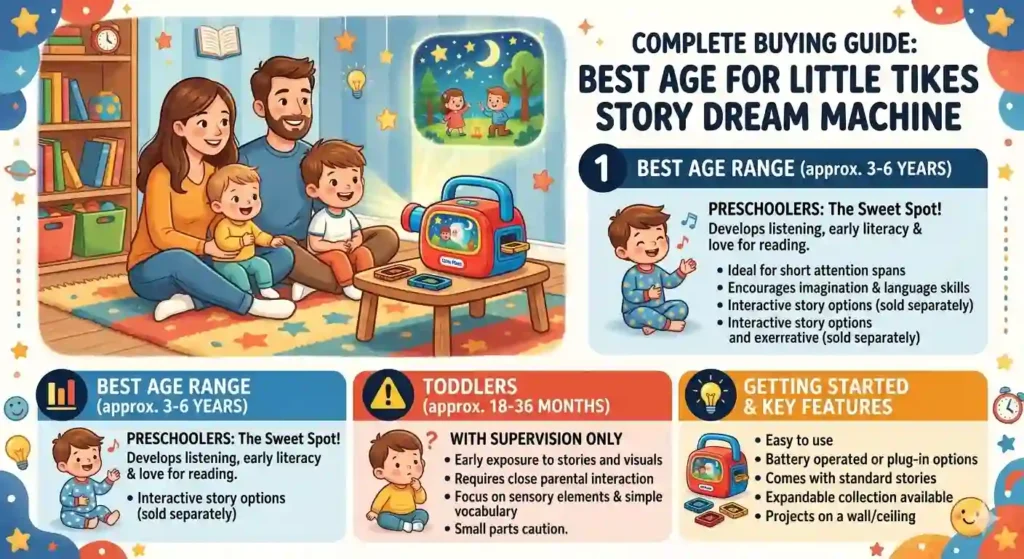
If you are wondering about the best age for Little Tikes Story Dream Machine, you are in the right place. This guide will walk you through exactly when to introduce this popular story projector, what to expect at every developmental stage, and how to use it to create a peaceful, soothing environment for your little one.
Fast Answer: Best Age Summary
For parents in a rush, let’s get right to the point. What is the ideal age range for the Little Tikes Story Dream Machine?
- Best Age: 2–5 years
- Good But Variable: 18–24 months
- Less Ideal: 6+ years
- Not Recommended: Under 18 months
Why this breakdown? The Little Tikes Dream Machine age guide is rooted in developmental stages, attention span, and interaction level. Children between two and five years old have the language comprehension to follow along with the stories, the imagination to get lost in the projections, and the need for a predictable, comforting bedtime routine.
Children under 18 months simply do not have the attention span for a projected story, and the small cartridges pose a safety risk for babies who put everything in their mouths. Once a child hits six or seven, they typically crave more complex narratives and interactive reading experiences.
Why Age Matters With Story Toys
When choosing a toddler story projector age appropriateness is about more than just a number on a box. It is about matching the tool to your child’s rapidly changing brain.
Cognitive and Developmental Stages
During the first five years of life, your child’s cognitive abilities explode. They transition from simply observing colors and lights to understanding complex narratives, predicting what happens next, and empathizing with characters. A story projector requires a child to sit still, watch a static image, and listen to a narrator. This requires a level of cognitive maturity that simply isn’t present in infancy.
Attention Span Differences
A one-year-old might look at a projection for thirty seconds before crawling away. A three-year-old, however, can sit completely mesmerized for the duration of three entire stories. As their attention spans grow, they can extract more value from the Story Dream Machine.
Language Comprehension Growth
To enjoy an audio-based toy, a child needs to understand the words being spoken. Around age two, children experience a “language explosion.” They begin to grasp the meaning of sentences and follow simple plots. The Story Dream Machine age recommendation aligns perfectly with this developmental leap, offering a wonderful way to expose them to new vocabulary.
Routine vs Play Factor
Age also dictates how a child uses the device. For a young toddler, this is primarily a routine tool. It signals that the day is over. Toddlers thrive on predictability. Knowing exactly what happens at bedtime gives them a deep sense of security and control over their environment. For an older preschooler, the projector becomes a tool for independent play and imaginative exploration.
Screen-Free Benefits vs Developmental Readiness
We all know the benefits of screen-free play. Reducing blue light before bed helps the brain produce melatonin, preventing the physical restlessness that can sometimes mimic the unsettling feeling of anxiety in young children. However, a child must be developmentally ready to accept a slower-paced, less hyper-stimulating form of entertainment.
Age Group Breakdown
Let’s dive deeper into exactly how children at different ages interact with this storytelling device.
🧒 Under 18 Months (0–1.5 yrs)
At this stage, babies and young toddlers are sensory explorers. They learn by touching, tasting, and throwing.
What they understand: They might enjoy looking at the bright light on the wall, but they cannot follow the storyline. The audio will just sound like background noise.
Sensory limits: Their visual tracking is still developing, and static images do not hold their attention long.
Fine motor limitations: They cannot operate the machine or insert the cartridges themselves.
Is it safe? The manufacturer recommends this toy for ages 3 and up due to the small size of the story cartridges, which can be a choking hazard for children who still mouth objects.
Alternative recommendations: Stick to high-contrast board books, soft fabric books, and singing lullabies yourself.
👶 18–24 Months
This is a transitional period. Some older one-year-olds are ready for short, guided sessions, while others are still too busy running around.
Emerging language comprehension: They are beginning to recognize familiar words and might point at animals or objects projected on the wall.
Attention span patterns: You might get three to five minutes of focused attention.
Interaction readiness: They will likely want to press the big buttons, but they will still struggle to insert the cartridges correctly.
How to use with parent assistance: Keep sessions very short. Treat it as a special, parent-led activity rather than an independent toy. Let them turn the machine on, but handle the small parts yourself.
🧠 2–3 Years (Toddler Peak)
This is the absolute best age for a screen-free storytelling toy like this one.
BEST age bracket: Two- and three-year-olds are the perfect audience. They are deeply engaged by the concept of “movie time” in their bedroom.
Language development: They can follow the simple plots of the included Random House stories and will actively learn new words from the narration.
Imagination & storytelling readiness: They are beginning to understand pretend play. The static images leave room for their imaginations to fill in the blanks.
Routine learning and bedtime cues: At this age, toddlers often push boundaries at bedtime. They might resist the transition from waking to sleeping, feeling a sudden lack of freedom, much like the subconscious frustration of feeling trapped. The Dream Machine creates a comforting, non-negotiable step in the routine that they actually look forward to.
🧒 4–5 Years (Preschool)
Preschoolers still get an immense amount of joy and value from this device, though their usage patterns will shift.
Sustained attention: A four-year-old can easily sit through three back-to-back stories, fully absorbing the narrative arc.
Interactive play patterns: They will confidently operate the machine themselves. They might start “reading” along with the narrator or making up their own stories based on the projected images.
When it stops feeling too baby-ish: The included stories are classic, so they don’t feel overly babyish to a preschooler. They will enjoy collecting different character cartridges.
👧 6+ Years
Once a child enters first grade, their relationship with storytelling changes dramatically.
Why it may feel too simple: Six-year-olds are learning to read themselves. They generally prefer chapter books, more complex audiobooks, or fully animated stories. The slow pacing of the Dream Machine might feel a bit boring to them.
When children outgrow it: You will notice them asking for it less frequently, preferring to read with a parent or listen to a more advanced audio player.
What Each Age Gets Out of It
To help you visualize the value at each stage, here is a quick breakdown of what your child will actually get out of the experience based on their age.
| Age | Primary Benefit |
|---|---|
| Under 18 mo | Sensory introduction (limited focus, mostly looking at the light). |
| 18–24 mo | Language exposure and quiet parent-child interaction. |
| 2–3 yrs | Routine comfort, bedtime compliance, and storytelling comprehension. |
| 4–5 yrs | Calm independent play and creative imagination sparking. |
| 6+ yrs | Optional comfort tool, though they may prefer more advanced content. |
Signs Your Child Is Ready
If you are on the fence about whether your two-year-old is ready, look for these observable signs of developmental readiness.
- Can sit through short stories: If your child can sit in your lap for a standard board book without immediately trying to turn all the pages or run away, they have the patience for a projected story.
- Shows interest in pictures or projections: If they notice shadows on the wall, point at airplanes in the sky, or love looking at family photos, they will likely be captivated by the projector.
- Responds to voice narration: If they pause and listen when you put on an audio story or sing a song, they are ready for the audio component of the machine.
- Enjoys bedtime routines: If they thrive on their bath-book-bed sequence, this tool will fit right in.
- Needs a visual anchor: Some toddlers develop sudden nighttime fears around age two or three. Having a friendly, glowing image to look at can provide immense comfort and distract them from their worries.
Safety & Developmental Considerations
When deciding when to get Story Dream Machine, safety must be your top priority.
Small Parts and Choking Risk
The story cartridges are small, square plastic pieces. For a child under three who still puts toys in their mouth, these pose a clear choking hazard. If you choose to use this with a child under three, you must keep the cartridges out of their reach and handle the loading and unloading yourself.
Volume Levels
The device has adjustable volume. For healthy auditory development, always keep the volume at a moderate or low level, especially if the machine is placed close to the child’s bed.
Battery Safety
The battery compartment is secured with a screw, which is a crucial safety feature for any toddler toy. Ensure this screw is always tightened to prevent access to the batteries.
Parent Supervision
This is not a digital babysitter. While older preschoolers can use it independently during quiet time, it is best used as a shared, supervised activity for younger toddlers. Sharing the story time helps build connection and provides a sense of safety, reinforcing the child’s feeling of being lovingly watched over as they drift off to sleep.
How to Use It at Each Stage
How you use the machine will evolve as your child grows.
Under 2 yrs — Parent-led, short sessions
Keep the machine on a high dresser. You handle all the pieces. Project the image on the ceiling while you rock them. Keep it to one story per night to avoid overwhelming their short attention spans.
2–3 yrs — Independent + guided
Allow them to choose which cartridge they want to watch. This simple choice helps them build a strong sense of identity and preferences. Let them press the big play button. Sit next to them while the story plays to enforce that it is time to be still.
4–5 yrs — Shared storytelling + play
Let them handle the cartridges. Ask them questions about the story. “What do you think the puppy is going to do next?” Use it during the day for independent quiet time in a dimly lit fort or tent.
6+ yrs — Occasional use
Keep it available for nights when they are feeling unwell or particularly tired and just want something passive and comforting to watch.
Alternatives by Age
If your child isn’t quite the right age for the Dream Machine, here are some excellent alternatives.
Under 18 mo: Stick to soft cloth storybooks, high-contrast board books, and simple musical plush toys that play lullabies.
18–24 mo: Interactive board books with flaps and textures, or simple cause-and-effect audio toys with large, safe buttons.
2–3 yrs: The Story Dream Machine is perfect here.
4–5 yrs: If they want more interaction, consider a Toniebox or Yoto Player, which offer vast libraries of screen-free audio.
6+ yrs: Dedicated kid-friendly MP3 players, audiobooks from the local library, or child-focused podcasts.
FAQ Section
What age do toddlers understand projections?
Most toddlers begin to understand that a projection represents a real picture or story around 18 to 24 months. Before that, they mostly just see it as a neat light trick.
Is it too advanced for 18 months?
Not necessarily too advanced, but their attention span will be very short. An 18-month-old will likely enjoy it for a few minutes with a parent’s help, but they cannot operate it safely alone.
When do kids lose interest?
Children typically start losing interest around age 6 or 7, as their reading skills develop and they seek out more complex, fast-paced entertainment.
Does it help with routine?
Yes, immensely. It acts as a concrete visual and auditory cue that the day is over. It creates a smooth, peaceful bridge between wakefulness and deep sleep, helping to prevent the jarring physical restlessness that is sometimes associated with disruptions like sleep paralysis.
Is it safe for under 2?
The machine itself is safe, but the cartridges are a choking hazard. If used with a child under two, parents must keep the cartridges completely out of reach and supervise the entire experience.
Will it improve bedtime behavior?
For many toddlers, yes. By replacing the blue light of tablets (which suppresses melatonin) with a gentle projection, you help their brain naturally wind down. Letting them choose the story also reduces bedtime power struggles, giving them a healthy sense of power over their routine.
Can preschoolers still benefit?
Absolutely. Four- and five-year-olds are often the most enthusiastic users. They understand the stories fully and enjoy operating the machine independently.
Do I need a completely dark room?
The room does not need to be pitch black, but it needs to be quite dim for the projection to show up clearly on the wall or ceiling.
Are the stories educational?
Yes, they promote early literacy. Children learn to associate the spoken words they hear with the visual narrative they are watching, which builds vocabulary and listening comprehension.
How many stories come with it?
The starter kit usually comes with three stories. You will likely want to buy additional cartridge packs as your child grows to keep their interest.
Is it easy for kids to change the stories?
For a three-year-old, yes. The cartridges slot in fairly easily, though they might need a little practice at first to get them facing the right direction.
Does it require WiFi?
No, and this is a huge benefit for parents looking for a truly screen-free, distraction-free device. It runs entirely on the physical cartridges.
Can it be used as a nightlight?
Yes, when the story finishes, you can place the included character figure on top, and it functions as a soft, comforting nightlight and white noise machine.
By understanding the best age for Little Tikes Story Dream Machine, you can make an informed decision that supports your child’s development and brings a little extra peace to your nightly routine. Used at the right stage, it is a magical tool that fosters a love of storytelling in the gentlest way possible.


